
Building an AI-first culture is the process of embedding AI into organizational habits, workflows, and leadership behavior — not just procuring AI tools. Without this cultural foundation, organizations face a Shadow AI crisis where employees bypass slow official rollouts using unapproved tools, creating security and compliance risks. This disconnect proves that AI transformation cannot be delegated — it's the defining leadership and change management challenge of this decade.
The shadow AI crisis
When official AI rollouts are slow or misaligned, employees find their own solutions, leading to 'Shadow AI.' Staff using unapproved tools like ChatGPT creates a two-sided crisis. Organizations face massive security risks, data leaks, and compliance violations. Simultaneously, it signals leadership's failure to provide necessary tools. This disconnect proves AI transformation cannot be delegated; it must be driven by leadership engaged with the human side of change.
The benefits of an AI-first culture
When leaders shift focus from buying technology to building an AI-first culture, benefits transcend efficiency, redefining what's possible for a resilient, innovative, and competitive organization.
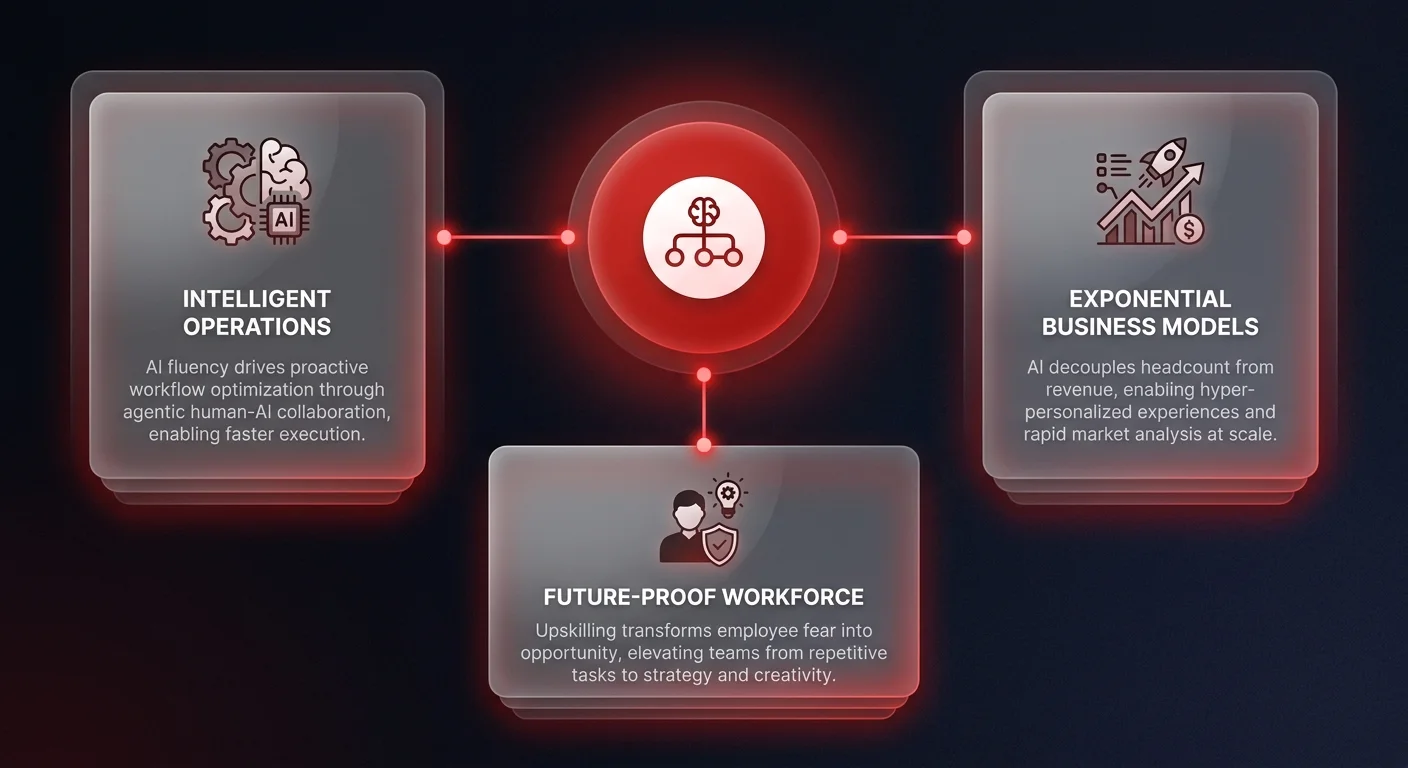
This culture drives Intelligent Operations, reinventing workflows via universal AI fluency. Teams proactively optimize processes through 'agentic' human-AI collaboration, enabling faster execution and new capabilities — exactly what AI-powered operations automation delivers when paired with genuine adoption culture. It also unlocks Exponential Business Models. AI disrupts, decoupling headcount from revenue. An AI-first culture scales intelligence, allowing hyper-personalized experiences, complex product development, and rapid market analysis — the kind of leverage we help leaders unlock through executive AI automation.
Furthermore, it fosters a Future-Proof, Resilient Workforce. Instead of job displacement, AI-first culture offers augmentation. Upskilling transforms fear into opportunity, elevating employees from repetitive tasks to strategy, creativity, and problem-solving - boosting morale, retention, and creating an agile organization.
The playbook for leaders
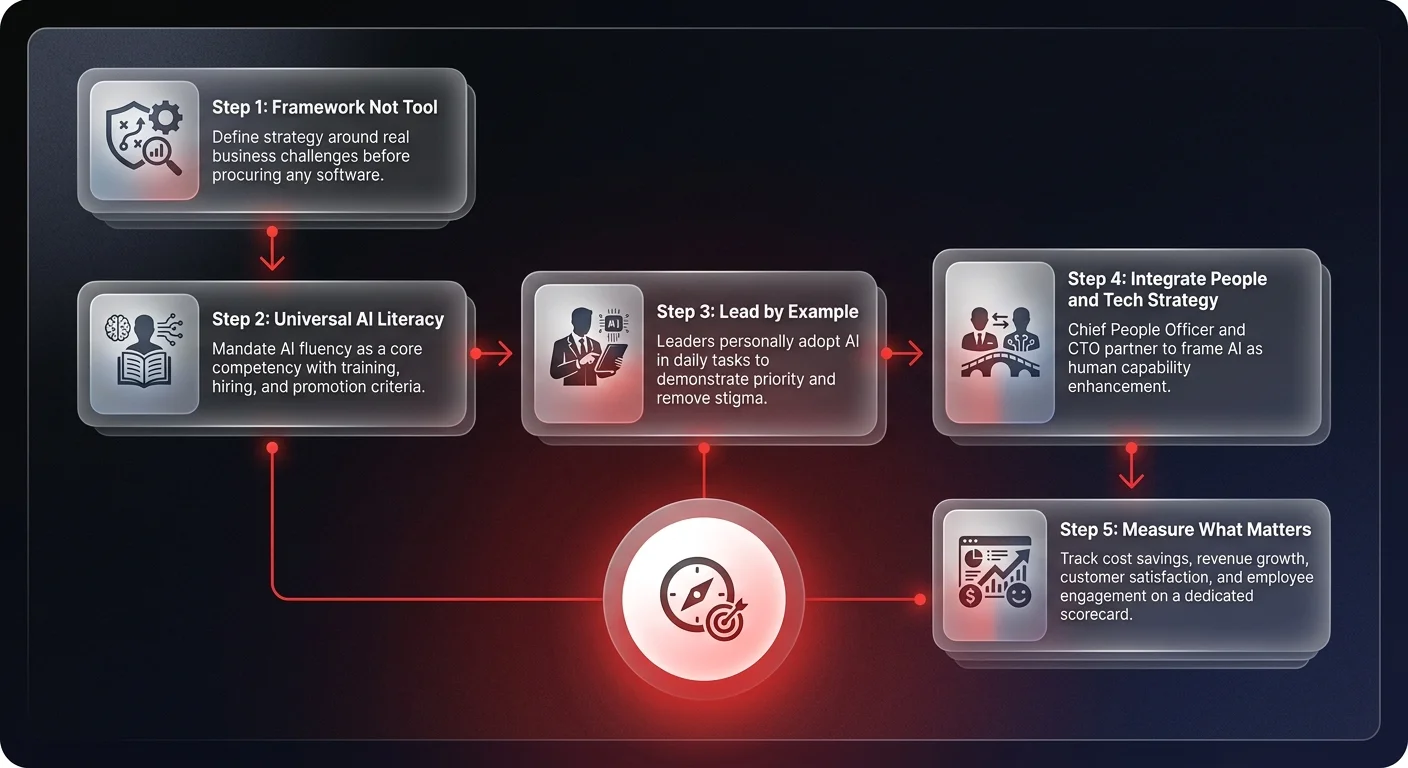
Start with a Framework, Not a Tool: Define strategy around pressing business challenges before buying software, ensuring technology serves the business.
Mandate and Fund Universal AI Literacy: Make AI fluency a core, organization-wide competency via deep training and by making proficiency a key hiring/promotion criterion.
Lead by Example (No Delegation): Leaders must enthusiastically adopt generative AI for their own daily tasks, demonstrating its priority and value.
Integrate People Strategy with Tech Strategy: Chief People Officer and CIO/CTO must partner to frame AI initiatives holistically, enhancing human capability and morale alongside efficiency and quality.
Measure What Matters: Create a dedicated scorecard tracking measurable business impact - cost savings, revenue growth, customer satisfaction, and employee engagement - to ensure accountability and momentum.
The path forward
The shift to an AI-first organization is a profound cultural and structural upheaval, far beyond a tech upgrade. Powerful AI tools demand a skilled workforce, solid foundations, and courageous leadership. Leaders who see this as mere procurement will be outmaneuvered. To navigate this complex journey and reinvent your organization, a clear roadmap - aligning technology, people, and processes - is critical.