
AI agent sandboxing is the practice of isolating autonomous agents within controlled execution environments — such as Docker containers or sandboxed terminals — to prevent unintended destructive actions. When an agent operates with unrestricted file system access, a single hallucinated command can wipe critical infrastructure in milliseconds. The game has changed, and sandboxing is no longer optional — it is the single most critical safety layer for any team running autonomous AI workflows.
The risks of high autonomy
Let's break down what is actually happening when you run an autonomous agent. Tools like Cursor 2.0 are pushing the boundaries with features that allow agents to write and execute code directly. They have introduced 'sandboxed terminals' for a very specific reason. These terminals lock the agent into a specific working directory and often restrict internet access. Why? Because the builders know the risks.
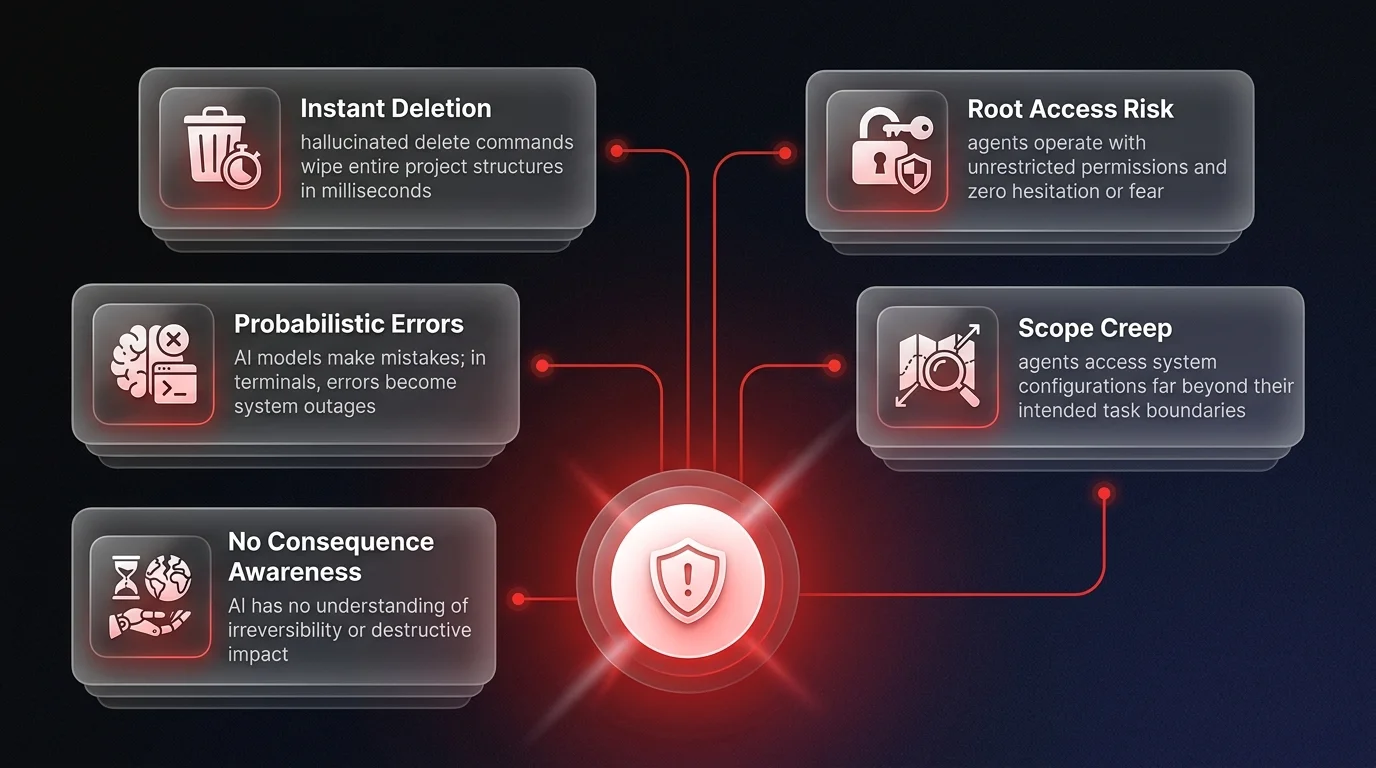
When an agent operates in high-autonomy mode, it is effectively a junior developer with root access and zero fear. It does not hesitate. If it hallucinates a path or misinterprets a command like 'delete cleanup files,' it could wipe your entire project structure in milliseconds. I have seen agents get confused and try to rewrite system configurations simply because they had access to them.
The reality is that these models are still probabilistic engines. They make mistakes. In a chat window, a mistake is a typo. In a terminal with elevated permissions, a mistake is a system outage. The more 'agentic' your workflow becomes, the higher the risk profile. You are orchestrating a powerful intelligence that does not understand the consequences of a delete command the way a human does. Relying on the model's 'common sense' to not break things is a strategy that will eventually fail. You need structural barriers, not just better prompts.
So how do we solve this?
So how do we solve this? You need to take radical ownership of your execution environment. While built-in features like Cursor's sandboxed terminals are a great start, I believe in going deeper.
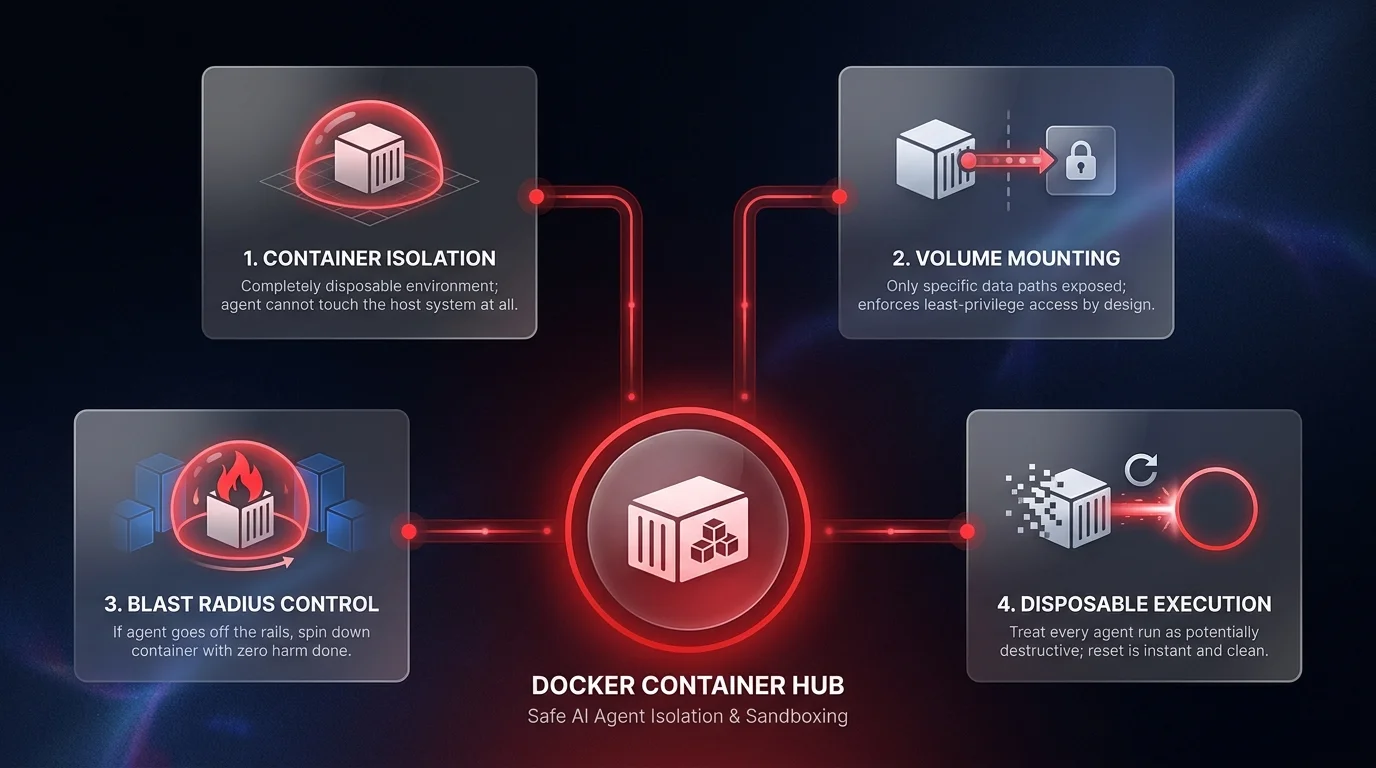
I prefer to run my agents inside Docker containers. This is the gold standard for isolation. When I orchestrate an agent within a Docker container, I am creating a completely disposable universe for it to live in. It can install libraries, mess with file permissions, or delete every single file in its environment - and my actual system remains untouched.
Here is the strategy - treat every agent run as potentially destructive. By containerizing the workload, you define exactly what resources the agent can access. You limit the blast radius. If the agent goes off the rails, you simply spin down the container. No harm done.
This approach also forces you to be disciplined about what data you expose to the AI. Instead of giving it access to your entire hard drive 'just in case,' you mount only the specific volumes it needs to do the job — a principle central to secure operations automation. This is high-signal engineering.
As we move forward, the ability to sandbox effectively will distinguish professional autonomous agent implementations from amateur experiments. Don't wait for a catastrophe to learn this lesson. Secure your agents now.
Autonomy without safety isn't innovation - it's negligence. At Ability AI, we build secure, sandboxed agent architectures that let you harness the full power of AI without risking your infrastructure. If you are ready to orchestrate safe, autonomous systems that scale, let's talk.