
Modular sub-agent architecture is the practice of breaking AI automation into specialized, single-purpose agents — each with one job — instead of relying on a single monolithic agent to handle everything. Unlike one massive context window that collapses under conflicting instructions, modular systems assign distinct roles to distinct agents: one hunts for data connections, another extracts insights, another manages files. This specialization is what transforms AI from a capable chatbot into a reliable, scalable automation system.
Here is what I mean by modular architecture
Here is what I mean by modular architecture.
In our own internal systems, we realized that a single context window - no matter how large - eventually collapses under the weight of conflicting instructions. You cannot ask the same agent to be a creative visionary and a strict file librarian simultaneously. The incentives clash.
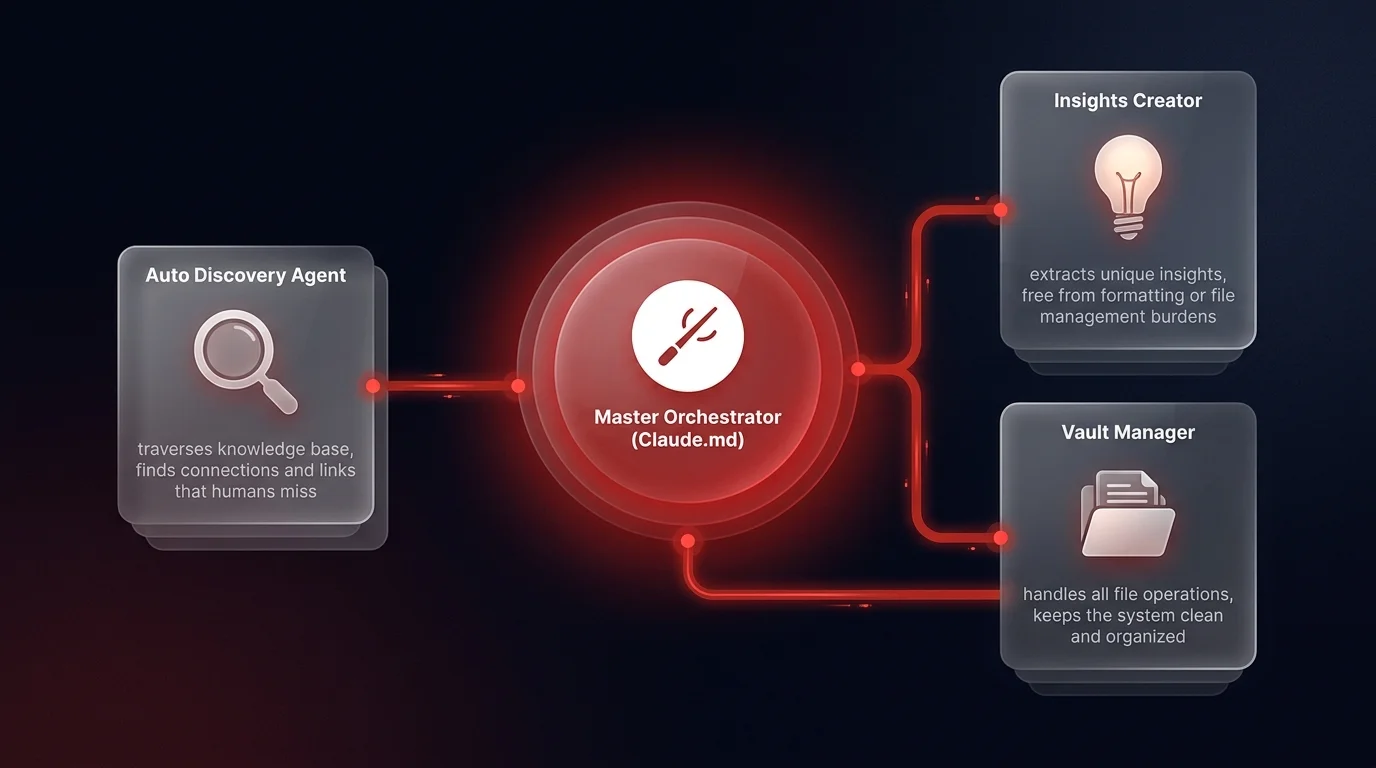
So we flipped the script. We built a specific '.claude/agents' folder structure that breaks the monolith into specialized sub-agents. We have the 'auto_discovery_agent', which acts basically as a hunter for connections within the knowledge base. Its only job is to traverse data and find links humans miss. Then we have the 'insights_creator', a specialized agent focused purely on extracting unique insights, free from the burden of formatting or file management. Finally, the 'vault_manager' handles the plumbing - the file operations that keep the system clean.
But here is the critical piece - the orchestration. We use a master 'Claude.md' file that acts as the conductor. It references a 'knowledge_base_analysis.md' file, which the AI generates and maintains. This gives the system a persistent, high-level understanding of the entire project state. Instead of re-reading every file every time, the system relies on this high-signal map to direct the right sub-agent to the right task — exactly the pattern we implement across our autonomous agent systems. This is how you amplify intelligence without drowning in noise.
When you adopt this modular mindset
When you adopt this modular mindset, you stop being a prompt writer and start becoming an architect. This distinction is vital.
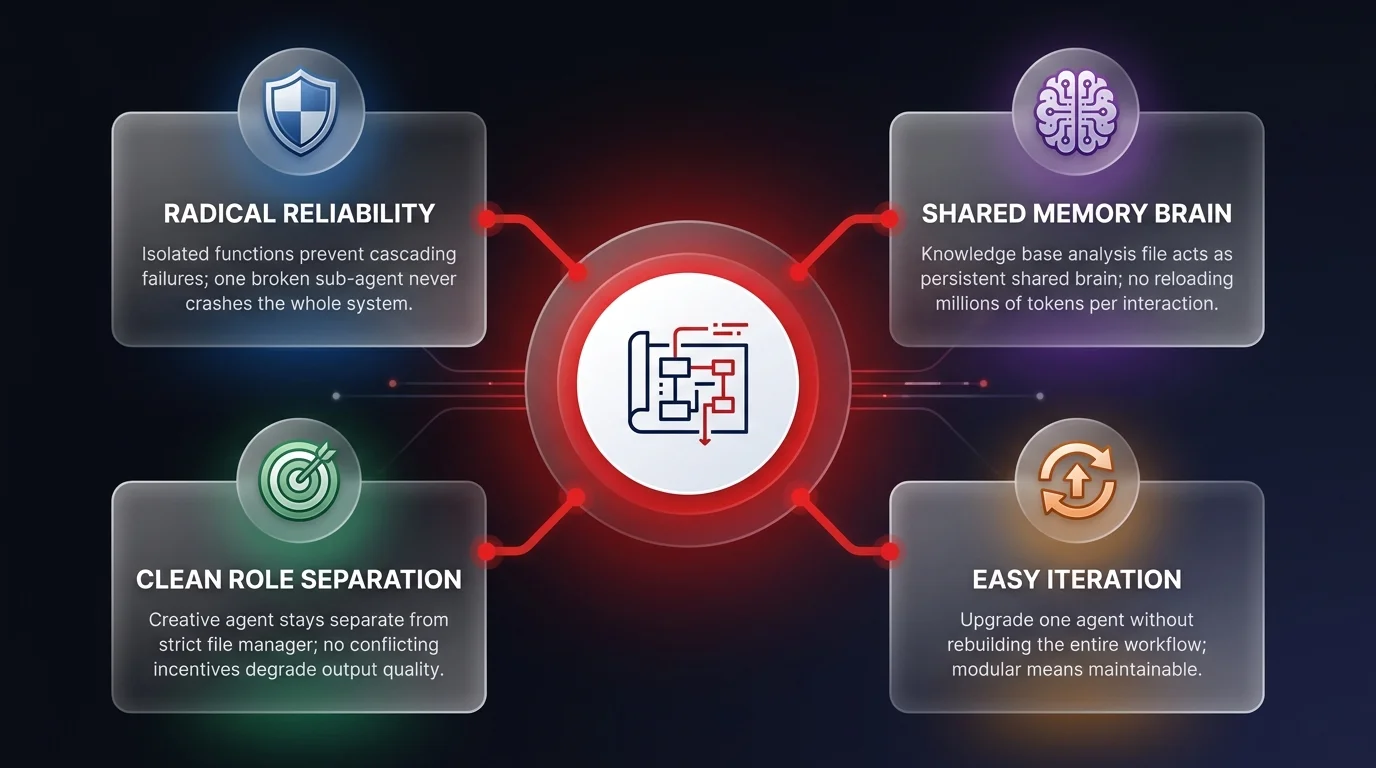
The single-agent model is fragile. If one part of the prompt drifts, the whole output degrades. By isolating functions into sub-agents, you create radical reliability. The 'insights_creator' can be creative without risking the integrity of your file structure, because the 'vault_manager' is a separate entity with strict guardrails.
This approach also solves the context problem. The 'knowledge_base_analysis.md' acts as a 'shared brain' for your agents. It allows them to retain context over time without needing to reload millions of tokens for every interaction. You are essentially building a system that learns and remembers, rather than one that just reacts.
So the question is not 'which model is best?' The question is 'how do I orchestrate these models to work together?' Stop trying to find the one prompt that rules them all. Start building the team of agents that will amplify your specific business logic — the foundation of effective operations automation. That is how you own the outcome.
This is not just theory - it is how we are building the future of automation at Ability AI. If you are ready to move beyond basic chatbots and start orchestrating true agentic workflows that drive real business results, we need to talk. Let's build a system that owns the complexity so you don't have to.