
AI action agents are the next evolution of business AI — systems that don't just answer questions but autonomously execute tasks, trigger workflows, and act on your behalf. Most businesses are stuck in the chatbot paradigm, treating AI like a glorified search engine. The game has changed from information retrieval to workflow execution, and companies building action-oriented agents — like Corbin, a personal agent built to execute tasks rather than chat — are leaving conversation-only tools far behind.
The chatbot paradigm is broken
The reality is that we are stuck in a 'chatbot' paradigm. We've been conditioned to think of AI as a conversational partner. But in a business context, conversation is often just friction. The real power of AI lies in its ability to function as a comprehensive operating system that is connected to what is going on in your business world.
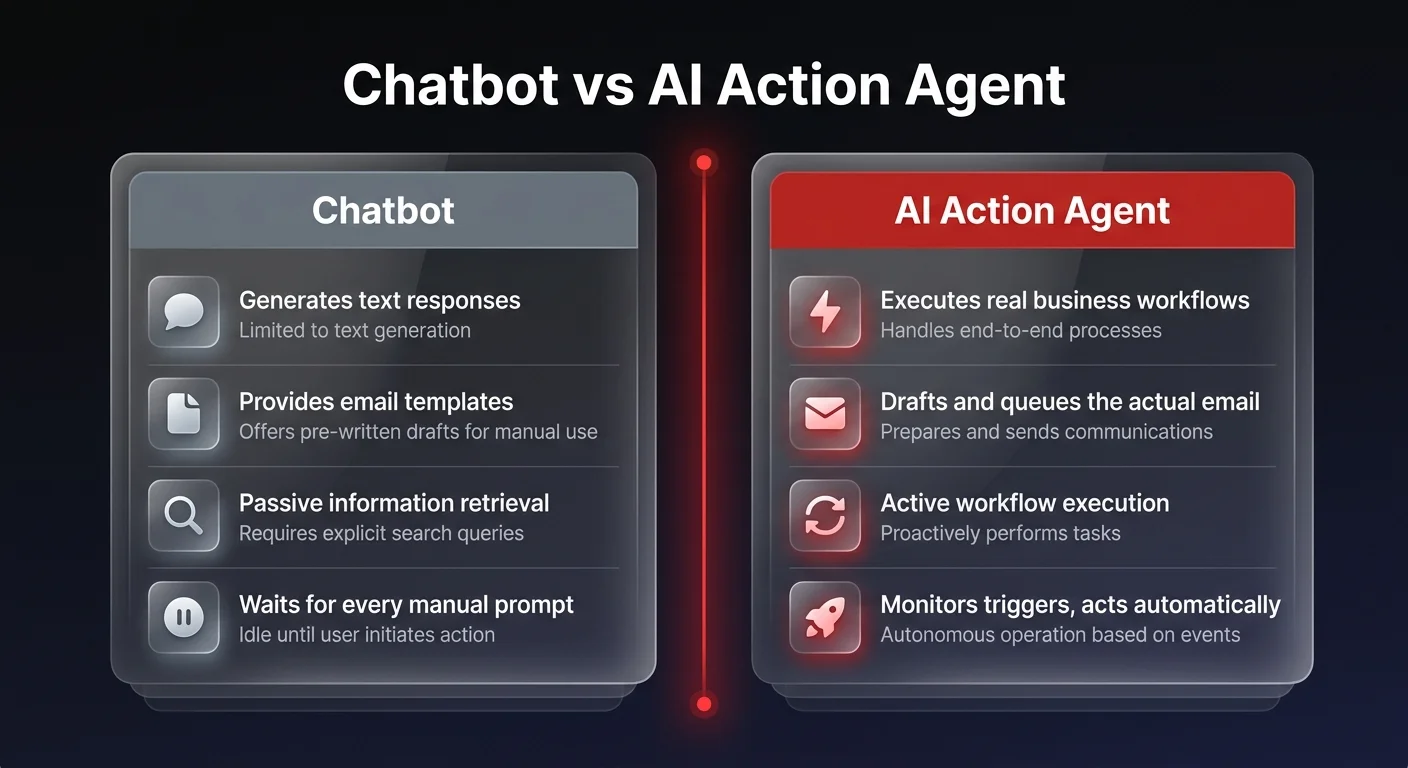
When I designed Corbin, I flipped the script. This agent is not built to answer questions, although it does that well. It is built to actually take action. I'm talking about moving from passive analysis to active execution. Consider the difference. A chatbot can tell you 'Here is a template for a follow-up email.' An agentic system looks at your calendar, identifies a meeting that just ended, checks your CRM for the context, drafts the specific email, and queues it for you to send.
From simple use cases like scheduling a meeting to complex workflows like identifying folks that I need to follow up with based on signal-to-noise ratios in my inbox, the focus is on outcomes. Corbin acts as a layer of intelligence over my Google Tasks, email, and CRM. It doesn't just read; it writes. It doesn't just suggest; it does. This is radical because it requires us to trust the system not just with knowledge, but with agency. We are moving from tools that help us think to tools that help us act.
Operationalizing action
So, how do you operationalize this? The question isn't about which model is smarter. The question is about integration. To build high-signal agents, you must connect them to your operational stack. An agent that cannot read your database or write to your calendar is fundamentally limited — which is why purpose-built autonomous AI agents are designed around deep system integration from the ground up.
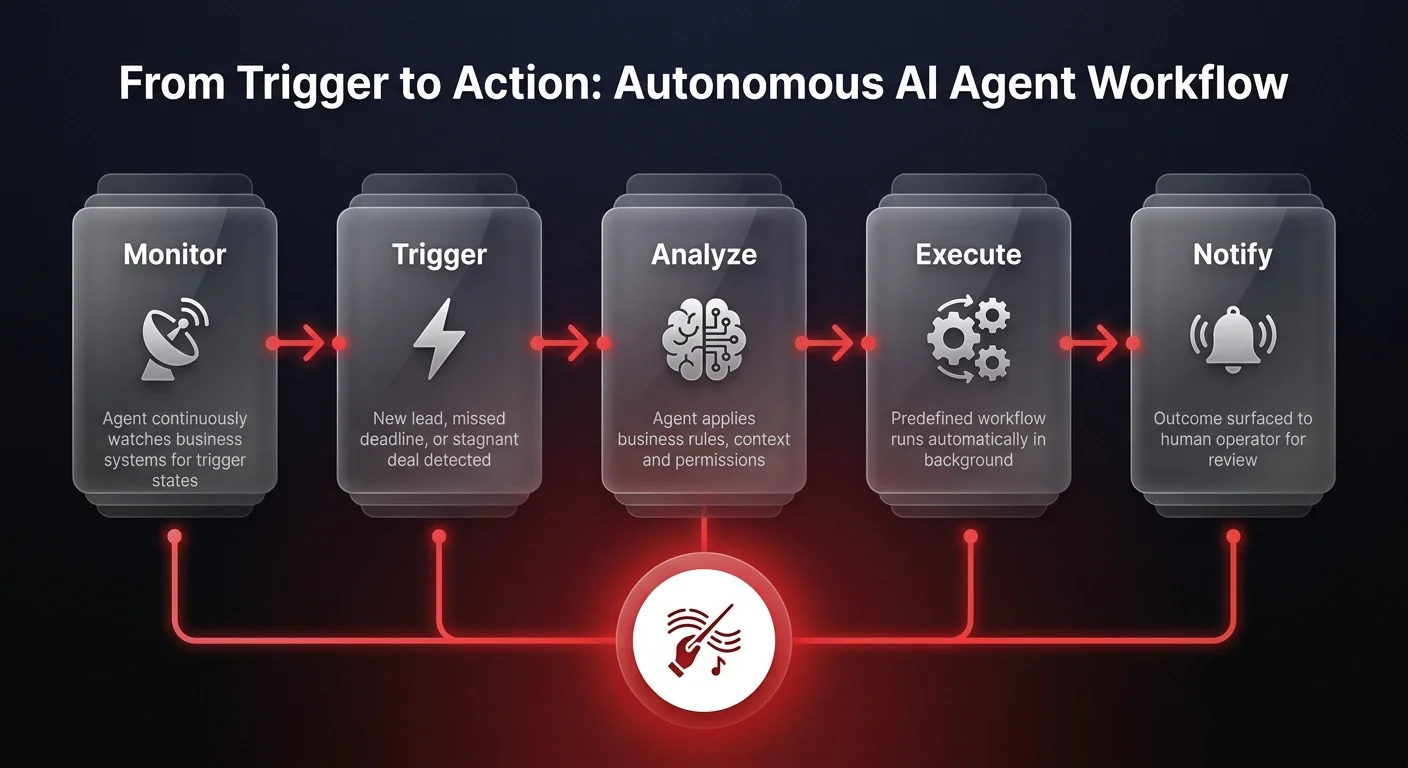
Instead of focusing on 'chat,' focus on 'triggers and actions.' Your agent should be running in the background, monitoring for specific states - a new lead, a missed deadline, a stagnant deal - and executing predefined workflows. This transforms the AI from a reactive tool you have to prompt into a proactive asset that nudges you.
This requires a shift in ownership. You are no longer the operator turning every screw. You are the architect orchestrating the system. You define the rules, the permissions, and the goals. The agent handles the implementation. It creates a loop where the AI handles the repetitive, low-level logic, amplifying your ability to focus on high-level strategy.
Don't let the hype distract you. The businesses that win in the next 12 months won't be the ones with the wittiest chatbots. They will be the ones with agents that silently, ruthlessly execute operations automation tasks in the background. That is where the leverage is.
Building agents that drive results
Are you ready to move beyond the chatbot and build systems that actually drive business results? At Ability AI, we specialize in creating agentic architectures that integrate deeply with your operations. Let's stop talking about AI potential and start implementing AI that works. Reach out to see how we can orchestrate your business automation.