
Operational drag is the pattern where founders and CEOs spend the majority of their day on low-value tasks — emails, scheduling, CRM updates — leaving strategic work squeezed into the cracks between meetings. This isn't just inefficient; it's existential. When your highest-leverage decisions get compressed into 15-minute windows, your company's growth ceiling drops accordingly. AI agents eliminate this drag by autonomously handling repetitive workflows, freeing executives to focus on the decisions that actually move the needle.
I lived this struggle for years
I lived this struggle for years. I'd end a 12-hour day feeling exhausted but wondering if I actually moved the needle on anything that mattered. The operational drag was real. I realized that my attention was being hijacked by work that, while necessary, didn't require my unique perspective as a CEO.
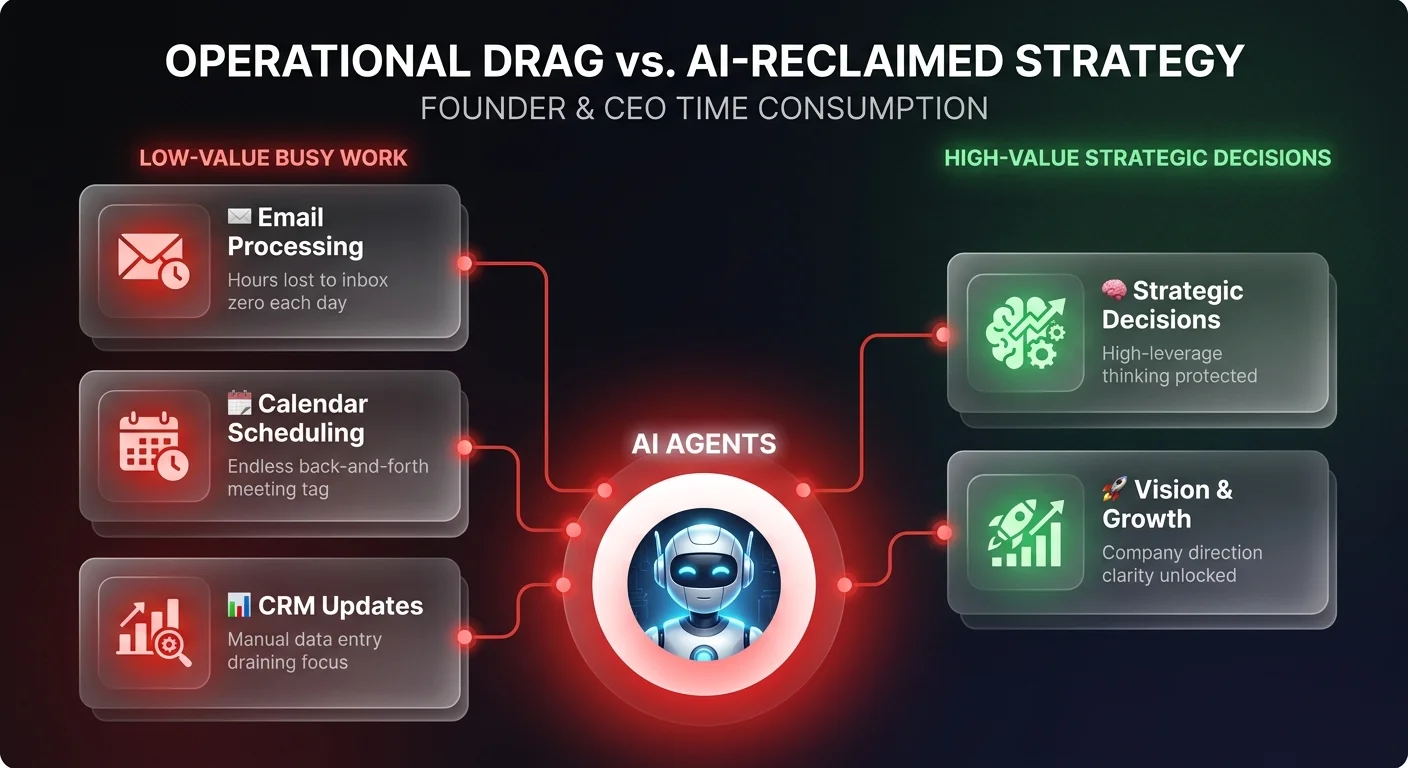
The reality is: if you're running a business, there are too many balls that you need to juggle at the same time in order to get stuff done. I found myself constantly context-switching - jumping from a strategic roadmap to a scheduling conflict, then to a vendor email, and back again. The result? The really important stuff - the strategy, the high-level business decisions, the vision of your company - was being executed in between those things, in the middle of the cracks.
That's why I built Corbin, my own AI agent. I needed to stop switching between a dozen different tools just to keep the lights on. I needed to orchestrate a system where the busy work happened automatically. Now, I'm not drowning in tabs. The game has changed. We used to think 'hustle' meant doing everything yourself. But that mindset is a trap. If you're manually processing every email or scheduling every meeting, you aren't being a CEO; you're being a highly paid admin. The goal isn't to work faster; it's to remove the friction entirely.
So, how do you actually implement this shift?
So, how do you actually implement this shift? It starts with a radical audit of where your attention goes. Look at your last week. How many hours did you spend on tasks that an agent could handle? The question isn't whether you 'can' do these tasks; the question is whether you 'should'.
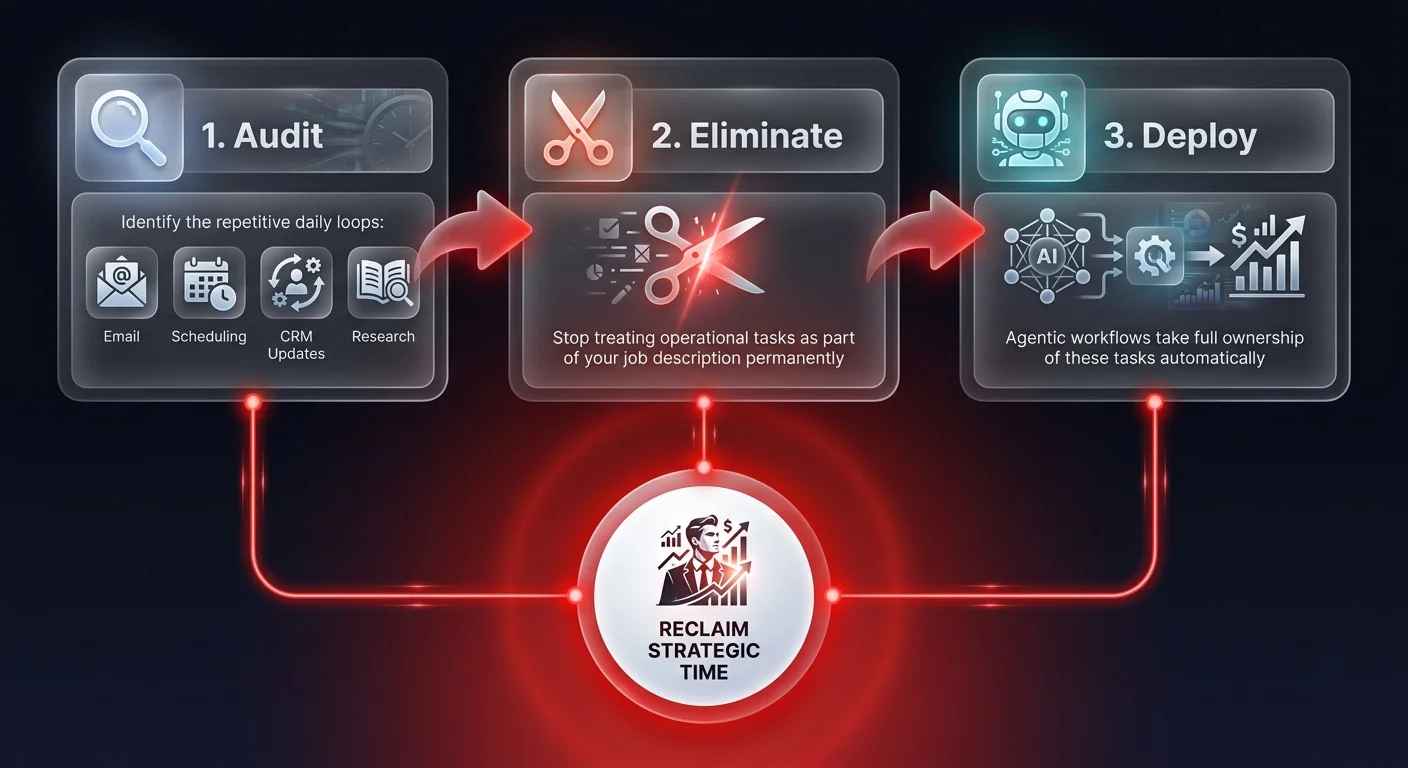
This is about ownership of your mental energy. An agentic workflow doesn't just 'help' you; it changes the nature of your role. Instead of being the bottleneck for every operational detail, you become the architect of the system. For example, instead of spending two hours digging for competitor updates, you have an agent deliver a high-signal summary to your inbox before you even wake up. Instead of playing email tag, your agent negotiates the slot — which is exactly what executive AI assistants are designed to handle, from competitive monitoring to calendar management.
The future of work isn't about AI replacing founders. It's about AI liberating them. When I use an agent, I'm not just saving time; I'm protecting my ability to think clearly. I can focus on high-signal decisions because I know the operational machinery is running in the background.
Here is what you need to do. First, identify the repetitive loops in your day - the competitor research, the meeting prep, the follow-ups. Second, stop treating these as part of your job description. They are bugs in your workflow. Third, deploy agentic workflows to own these tasks completely. When you do this, you stop squeezing strategy into the cracks. You create wide, open spaces for deep thinking. That is where the real value is created.
You didn't start a company to manage calendars or sort emails. You started it to build something great. At Ability AI, we build the agentic architectures that handle the operational noise so you can get back to the vision. Let's orchestrate a system that works for you, not against you.