
B2B content automation pipelines are structured AI agent workflows that separate research and repurposing into distinct processes, eliminating the hallucination and shallow output that plagues teams using a single LLM for everything. The hard truth: feeding a general model a vague prompt produces generic content. High-signal B2B content requires two specialized pipelines — one for original research grounded in fresh data, and one for repurposing your own expertise into platform-specific assets.
At Ability AI, we don't just ask ChatGPT to write a blog. We run two distinct agent pipelines that solve the biggest bottleneck in B2B: high-quality input. One pipeline handles original research, and the other handles repurposing. If you aren't separating these, you're doing it wrong.
Let's break down the first pipeline
Let's break down the first pipeline - the Research Agent. The problem with most AI content today is that it's shallow. It recites generic knowledge because it's relying on training data that is months or years old. To fix this, you need an agent that acts like a senior research analyst, not a junior copywriter.
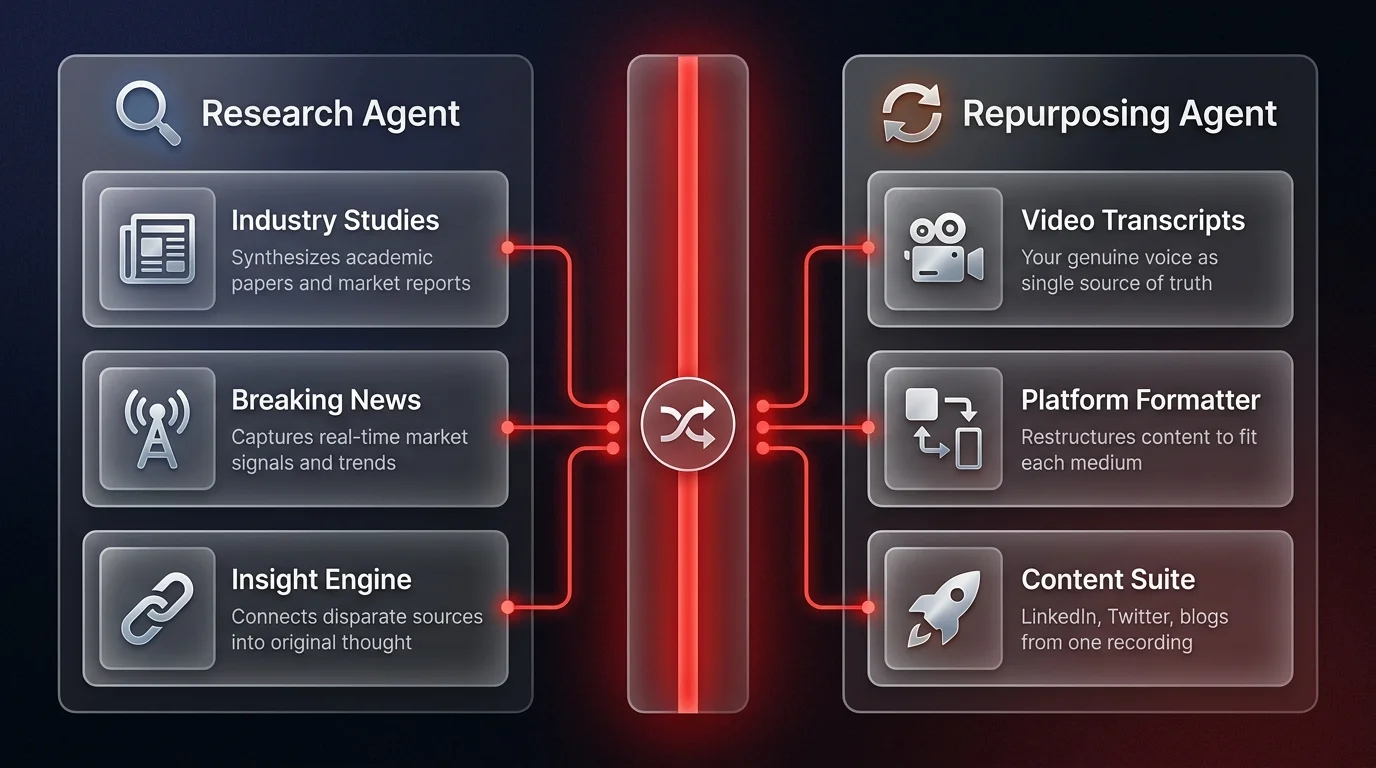
This agent goes out and hunts for high-signal information. It reads recent academic papers, analyzes new industry studies, and synthesizes breaking news. It's looking for the 'new' - the specific data points that humans might miss in the noise. It doesn't just summarize; it connects dots between disparate sources to create a foundation for original thought.
Then there's the second pipeline - the Repurposing Agent. This is where you amplify your internal thought leadership. We use video transcripts as our single source of truth. Why? Because speaking is faster than writing, and it captures your genuine voice and nuance. This pipeline takes one video and orchestrates a complete content suite — the same pattern we used in our AI content system build. It ensures that every piece of content sounds like you, because it is based on your actual words, just reformatted for consumption.
By separating these two functions, you solve the biggest problem in AI adoption: hallucination. When you ground your agents in either concrete external research or your own internal transcripts, you eliminate the drift. You're not asking the AI to 'be creative' - you're asking it to be an expert editor and format specialist. That is a radical difference in approach.
The real magic happens
The real magic happens when you look at the output volume. From a single 'source of truth' - whether that's a research brief from your first pipeline or a video transcript from your second - our agents generate 10 to 12 distinct assets. We're talking LinkedIn carousels, long-form articles, Twitter threads, and newsletter snippets.
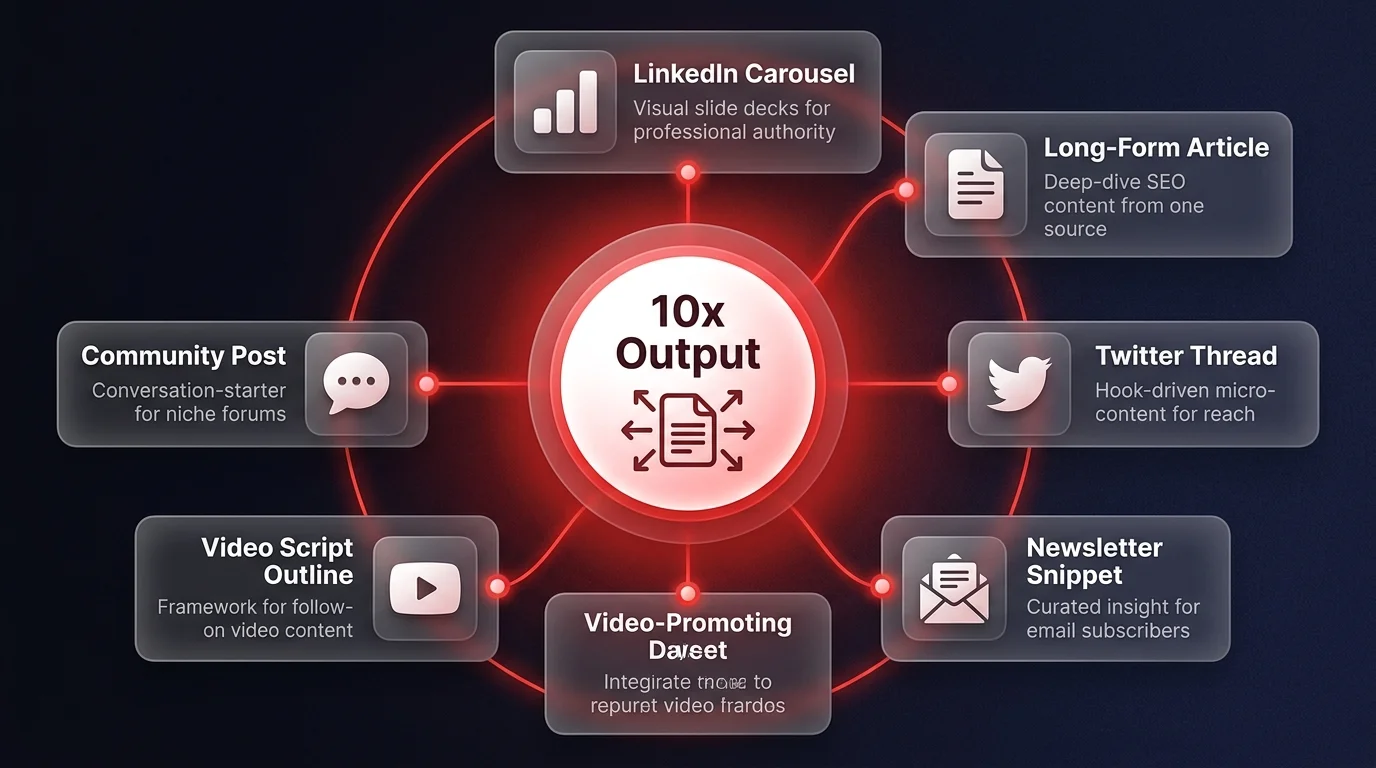
But here's the thing - each asset is strictly formatted for its specific platform. The agent doesn't just copy-paste; it restructures the argument to fit the medium. A tweet needs a hook; a whitepaper needs structure. This is radical efficiency. You're flipping the script on the traditional content team model. Instead of hiring five writers to produce five pieces, you orchestrate agents to produce fifty pieces from one core insight.
So what should you do?
First, stop trying to build one 'super agent' that does everything. It will fail. Build a research agent that only cares about facts and sources. Then, build a marketing content automation agent that only cares about voice and format.
The result? You own your niche. You flood the zone with high-quality, consistent thinking. This is how you build authority in 2024. It's not about writing more; it's about leveraging your best thinking to amplify your signal across every channel that matters.
Ready to stop writing and start orchestrating? At Ability AI, we build the agent architectures that turn your expertise into a scalable content engine. Let's talk about how to deploy these pipelines in your business today.