
Collaborating with AI agents effectively means treating them as dynamic team members, not vending machines — providing clear direction, iterative feedback, and maintaining strategic oversight of the final output. Unlike one-shot prompt submissions, effective AI collaboration involves a back-and-forth brainstorming process similar to managing a junior employee, where you direct strategy while the agent handles rapid execution.
When I build workflows, I don't just 'prompt' - I manage. The game has changed from prompt engineering to agent orchestration. If you want high-signal results, you need to stop looking for magic and start leading the process. Here is how effective collaboration actually looks.
The vending machine misconception
The biggest misconception in our industry right now is that AI agents are telepathic. They aren't. They are tireless, incredibly fast junior employees who need clear direction and course correction.
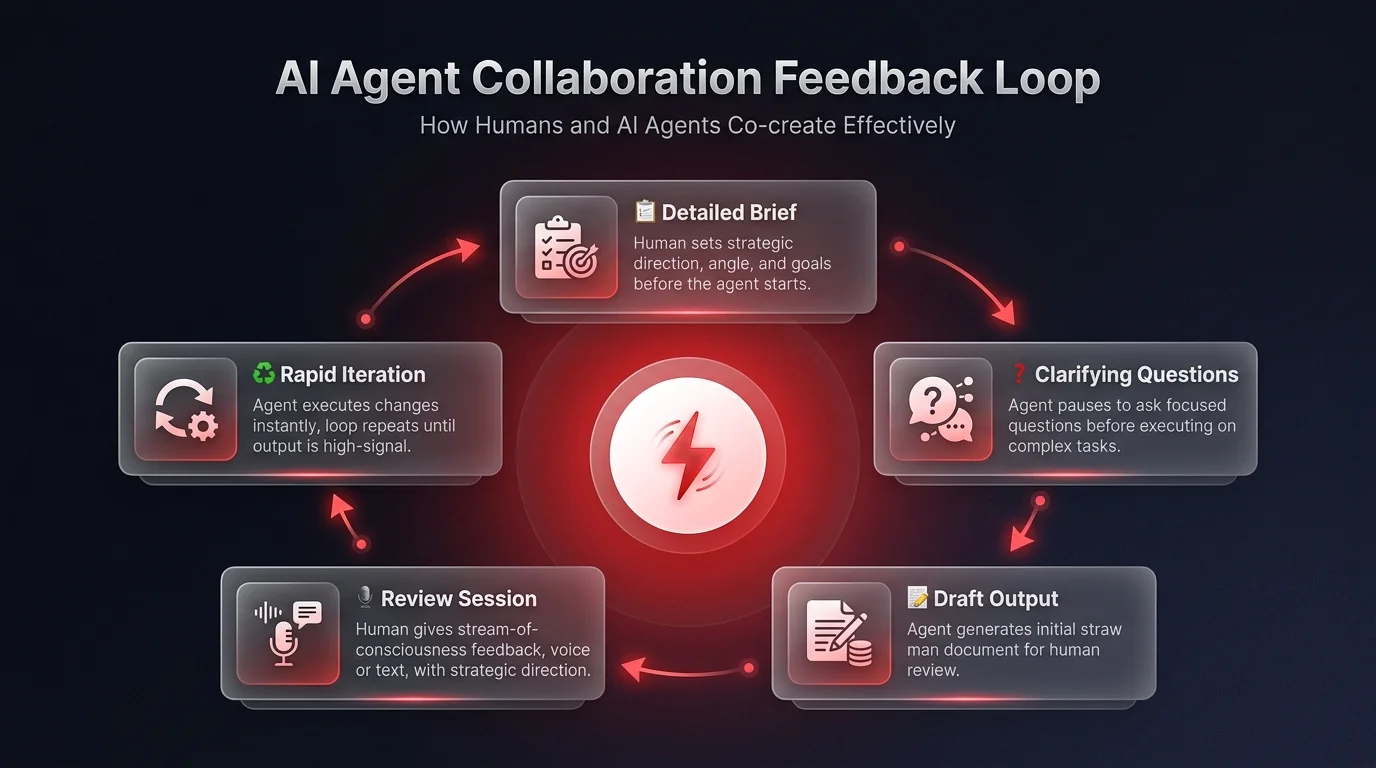
I recently demonstrated this while building a webinar deck with an agent. I didn't just paste a topic and walk away. I started with a detailed brief. But instead of guessing, the agent immediately paused to ask clarifying questions about the angle. It wanted to know if we were focusing on a 'problem shift' or a specific technical angle. That's a good sign - that's the agent acting like a partner, not a tool.
Once I answered, it produced a draft outline. And here is where the real work started. I didn't accept the first output. I treated it like a review session with a colleague. I turned on voice recording and gave live, stream-of-consciousness feedback while scrolling through the draft.
'I think we should remove slide six,' I told it. 'If they ask questions, we can answer, but let's keep the main flow tight.'
This wasn't a rigid command line entry. It was a conversation. I was the strategic director providing high-level judgment; the agent was the tactical executor handling the rapid iteration. This feedback loop - the push and pull of ideas - is where the magic actually happens. You have to orchestrate the output, not just request it.
The director mindset
So how do you apply this 'Director Mindset' to your own workflows?
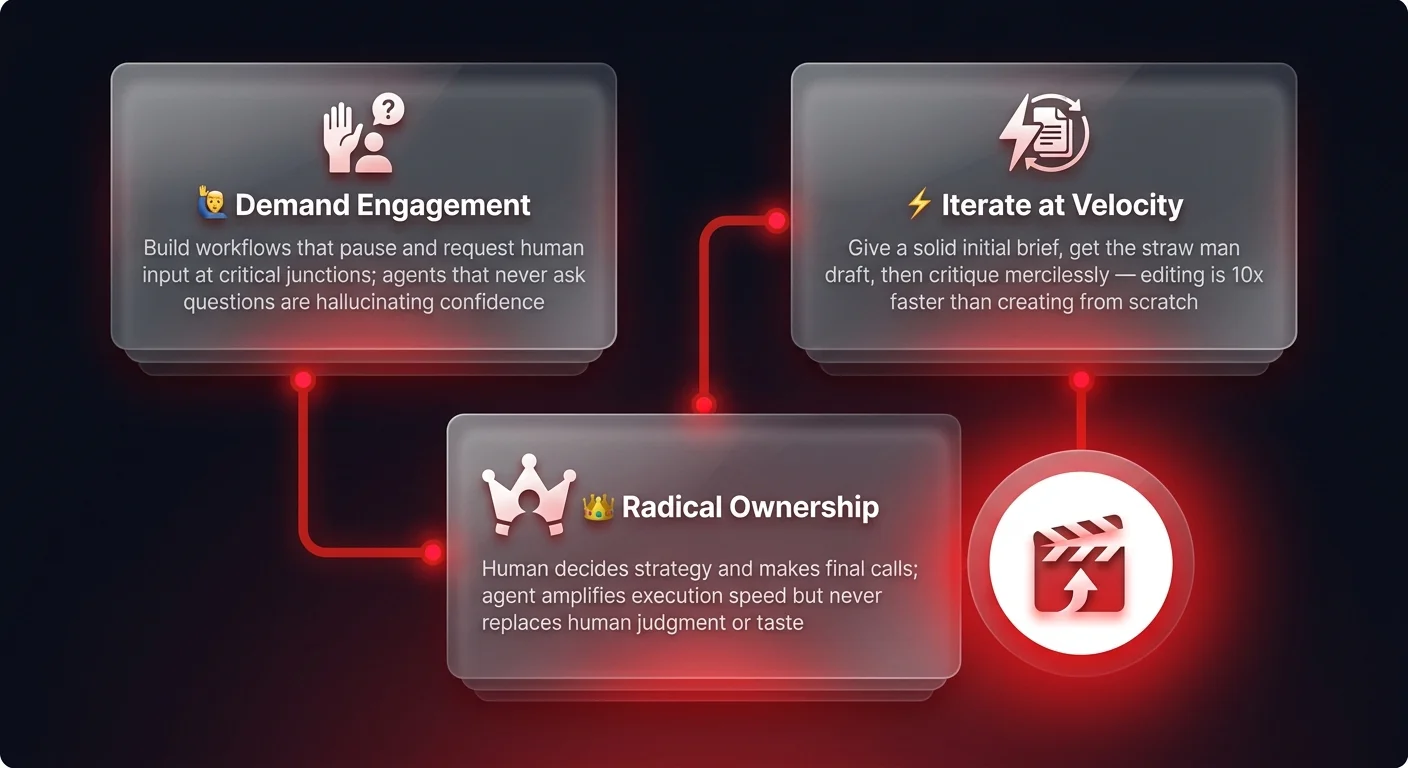
First, demand engagement. If your AI agent just spits out an answer without asking clarifying questions on a complex task, it's hallucinating confidence. Good agents ask before they execute. Build your workflows to pause and request human input at critical junctions.
Second, iterate with high velocity. Don't spend hours crafting the perfect prompt. Give a solid initial brief, let the agent generate a 'straw man' draft, and then critique it mercilessly. It is much faster to edit than to create from scratch. Use voice input if you can - it allows you to be more nuanced and conversational, adding context that text prompts often miss.
Third, maintain radical ownership of the final product. You are responsible for the outcome. The agent amplifies your ability to execute, but it doesn't replace your taste or judgment. When I saw slide six wasn't working, I made the call to cut it. The agent executes the change instantly, but the decision must be yours.
Stop trying to automate your judgment away. Instead, use agents to amplify your ability to iterate. That is how you move from generating generic content to producing high-signal work that actually drives business value — the core principle behind any effective operations automation initiative.
Building real automation systems
We are moving past the era of simple chatbots into true agentic workflows. But the human element remains the critical differentiator. At Ability AI, we help businesses design these collaborative architectures where humans direct and agents execute. If you are ready to stop playing with prompts and start building real automation systems, let's talk.