
Context scaffolding is a structured AI development workflow where foundational project documentation is systematically loaded into an AI coding assistant's context before each session. Unlike ad-hoc prompting, this ensures the AI understands your project's architecture, requirements, and constraints before writing a single line — preventing the hallucinations, legacy code, and feature-breaking changes that plague serious codebases.
The game has changed. You can't just throw tasks at an LLM. You need to orchestrate its environment. I've found that effective AI-driven development requires a radical shift in workflow - something I call 'context scaffolding'. It's the difference between an AI that breaks your build and one that operates like a senior engineer.
What is context scaffolding?
Here's what I mean by context scaffolding. Every time I sit down to code - whether I'm fixing a bug or building a new feature - I run a specific custom command: 'read docs simple'.
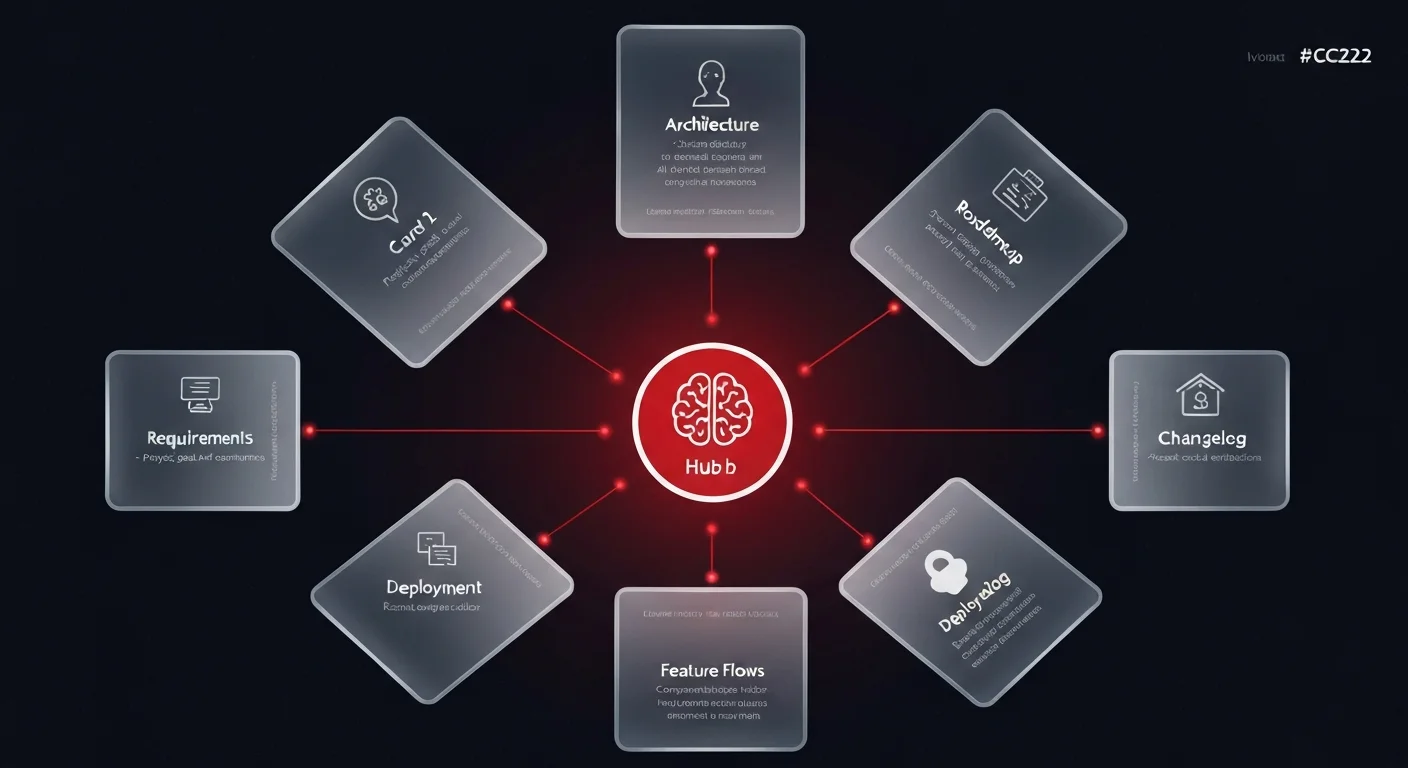
This isn't just a fancy script. It's an orchestration layer that forces the AI to ingest the critical 'cornerstone' documents of the project before it writes a single line of code. It reads the requirements, architecture overview, roadmap, feature flows index, deployment details, testing guide, and the changelog.
Think about it. When a new developer joins your team, you don't just point at a Jira ticket and say 'go'. You onboard them. You explain the architecture, the goals, and the constraints. With AI agents, you have to do this onboarding at the start of every single session.
Without this step, your AI is flying blind. It might write code that looks syntactically correct but violates your architectural patterns. It might re-implement a library you already have. By loading this context upfront, the agent becomes instantly aware of the project's holistic state. It knows what we're building, why we're building it, and how the pieces fit together. It stops guessing and starts engineering — a core principle behind effective AI-powered software development at scale.
The cyclical workflow
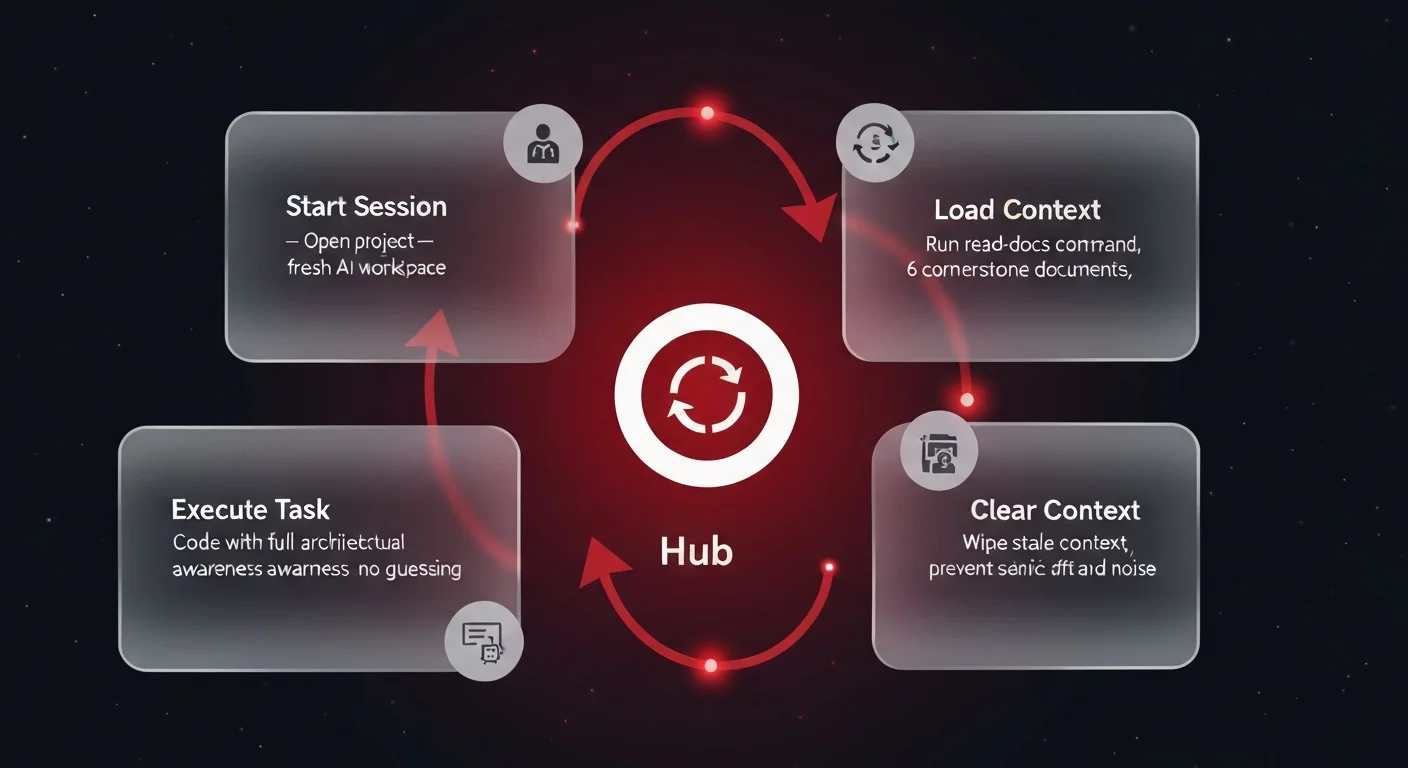
The implementation is radical in its simplicity but profound in its impact. My workflow is strictly cyclical. I start a session, I run the command to read the docs, I perform the task, and then - this is crucial - I clear the context.
Why clear it? Because stale context is toxic. It builds up semantic noise. By clearing the slate and re-ingesting the foundational documentation, I ensure the AI is always operating on high-signal information. It prevents the 'drift' that plagues so many AI-generated codebases where the code gets messier and messier over time.
To make this work for you, you need to own your documentation. You can't have scattered Google Docs or outdated wikis. Your documentation needs to be live files in your repository - Markdown files that live right next to your code. You need a project requirements file, an architecture definition, and a current roadmap.
If you don't have these, the AI has nothing to anchor itself to. But when you do, you're not just prompting; you're building a system where the AI acts as a true extension of your engineering mind. Stop treating the AI like a chatbot and start treating it like a team member that needs a briefing. That's how you scale AI development without the codebase collapsing under its own weight.
Building systems that understand
Building these systems requires a new way of thinking about software architecture. At Ability AI, we orchestrate AI agents that don't just write code - they understand your business logic. If you're ready to amplify your engineering throughput with agents that actually understand context, let's talk. The tools exist; you just need the right strategy to wield them.