
Vertical integration in AI is the strategic shift where application companies move from reselling access to foundation models toward owning the intelligence stack themselves. Tools like Cursor exemplify this — by releasing their own fine-tuned model, they reduced dependency on Anthropic and OpenAI, gained control over latency and cost, and began the transition from intelligence intermediary to intelligence supplier. This is the new playbook that most builders are missing.
The vertical integration play
Let's break down what is actually happening here. Cursor announced 'composer as a model' and labeled it a 'frontier model.' But look closely at the marketing. They aren't claiming this is the smartest model in the room. They aren't saying it beats Claude 3.5 Sonnet on reasoning. They're saying it is 4x faster.
That distinction is critical. It tells me this likely isn't a massive foundational model built from scratch. Instead, it is likely a smaller, highly efficient model that has been aggressively fine-tuned for AI-powered software development and paired with clever context engineering. They are orchestrating a specific outcome rather than building general intelligence.
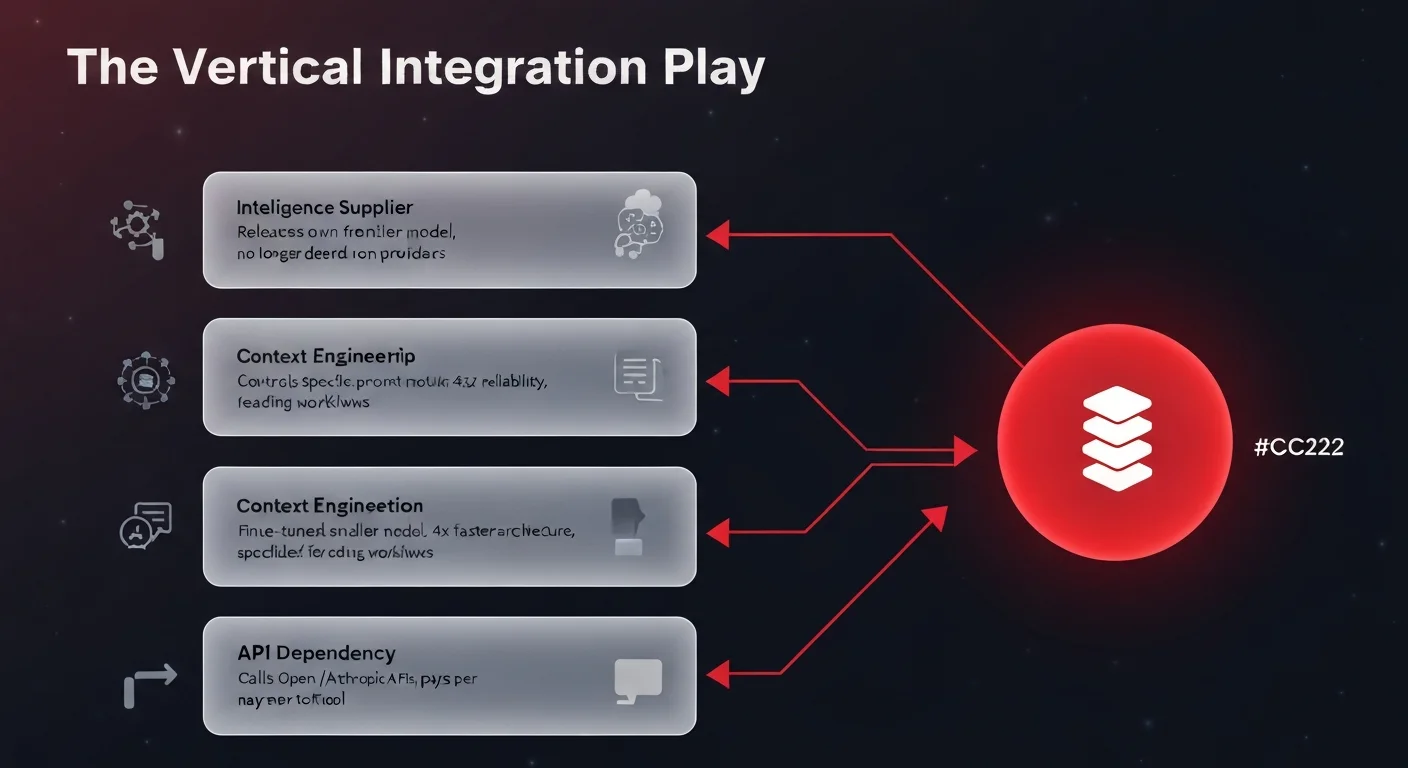
The play here is obvious. By introducing their own model, they start to own the value chain. They reduce their dependency on Anthropic or OpenAI. They control the latency, the cost structure, and the reliability. They are moving from renting intelligence to owning it. This is the new playbook for vertical integration in AI. They want to become suppliers of the raw intelligence rather than be intermediaries between users and large language model providers.
The intelligence challenge
However, there is a catch. Ownership is great for the business, but does it actually serve the user? I'll be honest - I'm a heavy user of the 'tropic family.' Anthropic's Claude models have a specific texture and reasoning capability that I trust. When I'm coding, I want the highest signal possible. I don't care if the model is 4x faster if the code it generates is 10% worse.
I don't envision myself switching to Cursor's proprietary model anytime soon, and that's the real challenge for these companies. Speed is a feature, but intelligence is the product. If you try to own the stack but deliver an inferior intelligence, you will lose the users who actually know what they are doing.
But for you - the builder or business leader - the lesson is clear. We are seeing a shift where applications try to capture the entire stack. If you are building AI solutions, ask yourself: are you just a middleman, or are you adding enough value that you can eventually own the intelligence layer? The status quo of just calling an API is disappearing. You need to orchestrate value, not just pass tokens.
Building for the future
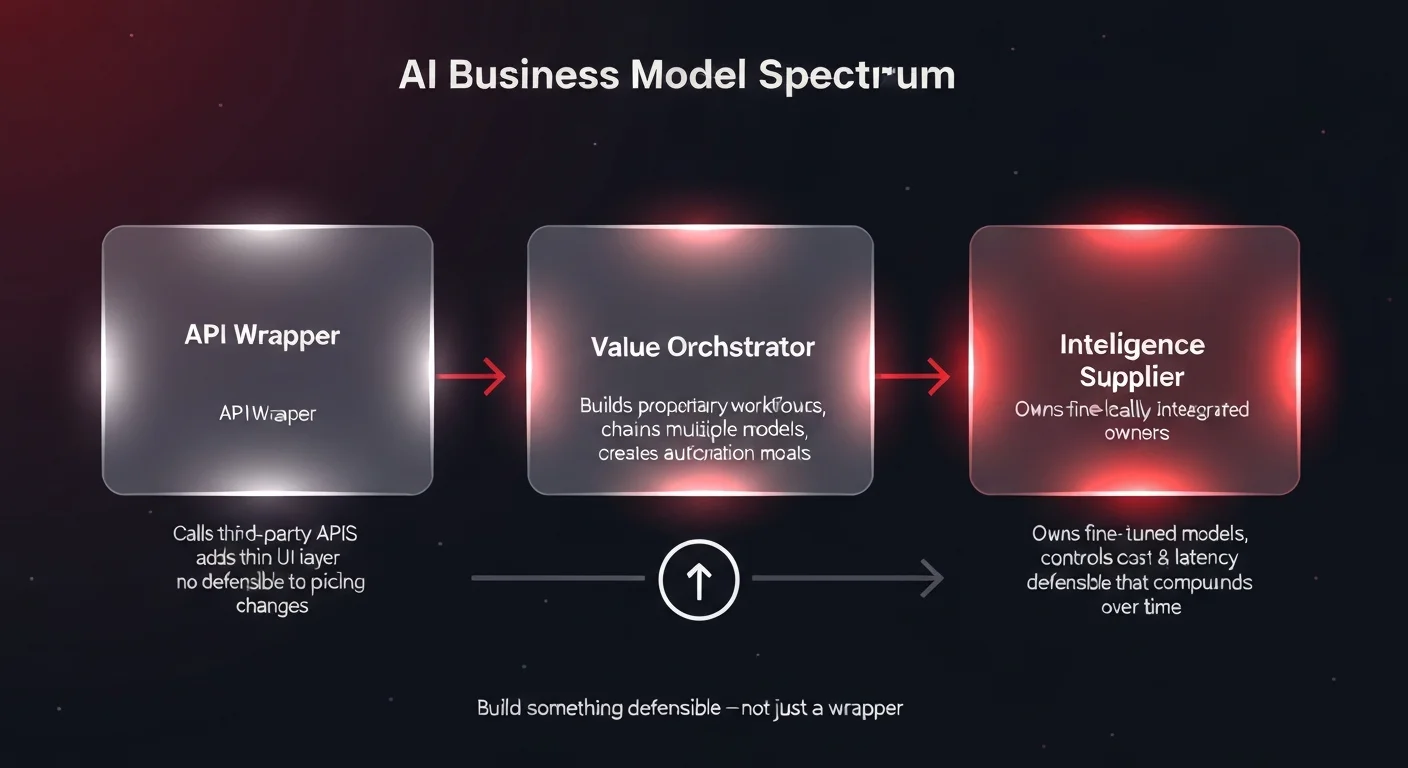
The game has changed. You can't just rely on generic models forever. At Ability AI, we help you navigate this shift, moving from simple implementations to robust AI agent architectures that you actually control. Whether you need to orchestrate existing models or fine-tune your own, we ensure your business isn't just a wrapper - it's a competitive asset. Let's build something that lasts.