
Europe's AI investment gap is a growing competitive crisis: in 2024, the US deployed over $110 billion into AI infrastructure and startups while Europe invested barely $10 billion — a 10x disparity that is reshaping global tech leadership. This gap isn't just about capital — it reflects a deeper cultural divide between risk-rewarding innovation ecosystems and regulation-first approaches that slow AI adoption velocity to a crawl.
Cultural conservatism
The game has changed, and the numbers tell a brutal story. When you look at the global landscape, the sheer aggression of US capital is overwhelming the conservative approach we see here in the EU. In Silicon Valley, the mindset is radical experimentation and rapid deployment. In Europe, the conversation is dominated by regulation, the AI Act, and preserving the status quo.
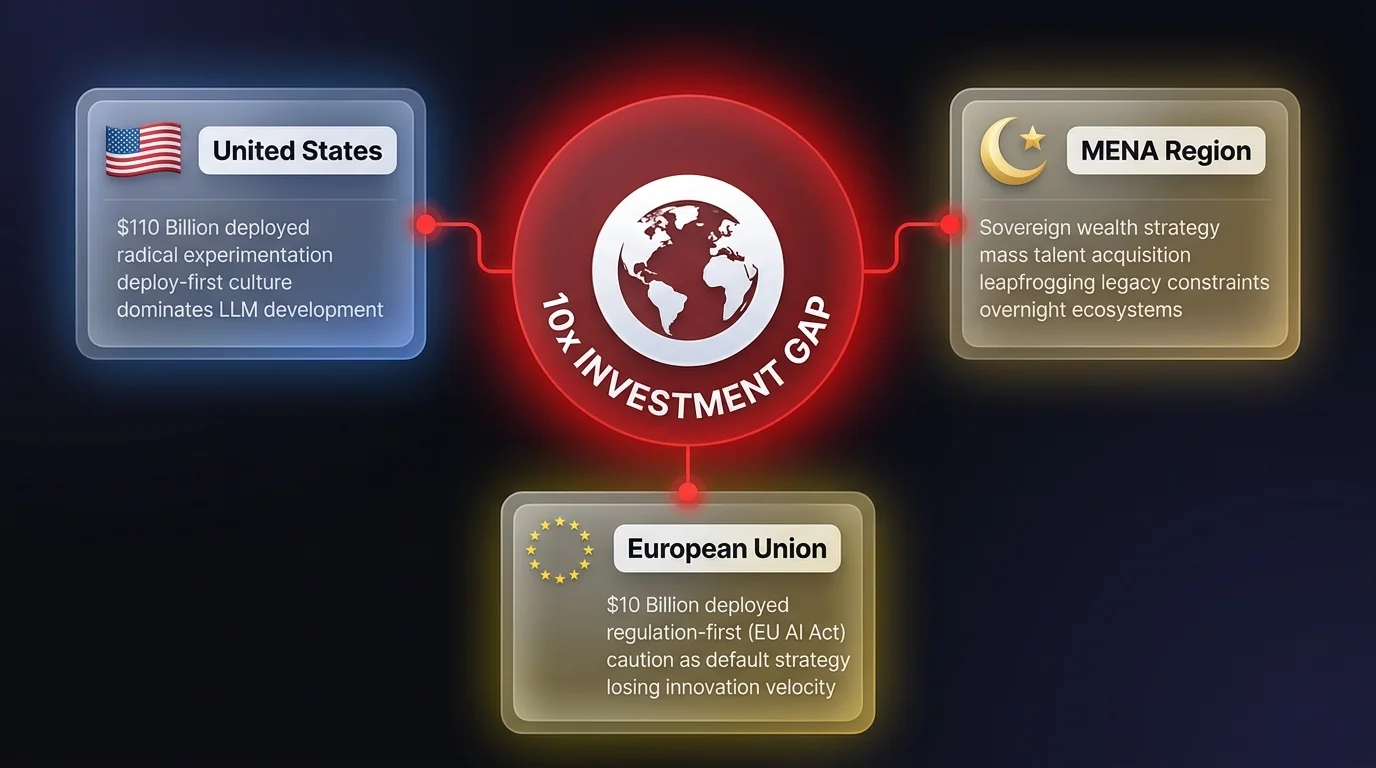
This cultural conservatism is creating a massive drag on innovation. We don't have the major LLM players here - with very few exceptions like Mistral - because the ecosystem simply doesn't support the level of risk required to compete. You cannot regulate your way to innovation. While European leaders are busy debating safety frameworks, American companies are shipping code, capturing market share, and defining the standards that the rest of us will eventually have to adopt.
It is not just about the money, though a $100 billion gap is impossible to ignore. It is about the velocity of decision-making. The US market rewards speed and scale. The European market rewards caution and compliance. In an exponential technology shift like AI, caution is the most dangerous strategy of all. The reality is that we are watching a widening chasm where one continent is building the engine of the future, and the other is writing the manual on how to use it safely.
The MENA leapfrog
But here is the twist that most people are missing - the competition isn't just coming from the West. While Europe sleeps, the MENA region is waking up and aggressively leapfrogging legacy constraints. They are flipping the script on how tech ecosystems are built.
Regions like the Gulf aren't waiting to grow organic ecosystems over decades. They are using their massive capital advantages to simply buy the necessary talent. They are recruiting heavily from talent pools in Jordan, Egypt, and beyond, effectively importing an innovation economy overnight. They realize that in the age of AI, talent density matters more than legacy institutions.
This creates a pincer movement for Europe. Squeezed between US capital dominance and MENA's aggressive resource deployment, the 'old world' is losing its relevance. For business leaders, the lesson is clear. You cannot afford to wait for your local ecosystem to catch up. The barriers to entry are dropping, but the cost of inaction is rising. If you are not aggressively orchestrating AI-powered operations automation within your own organization right now, you are effectively choosing to be left behind with the status quo. The question isn't whether your region is ready. The question is whether you are.
Own your AI strategy
The global map of innovation is being redrawn, but you don't have to be a bystander. Whether you are in Berlin, Dubai, or San Francisco, the imperative is the same - own your AI strategy or get disrupted. At Ability AI, we help forward-thinking leaders implement high-signal AI agents that drive real business value. Stop waiting for permission. Let's build.