
AI data sovereignty is the practice of hosting and running AI agents within infrastructure you control — so sensitive business data never leaves your perimeter. Most business leaders face a paradox: they know AI could radically optimize operations, but they're terrified of feeding proprietary data into a public model. The solution isn't better vendor terms of service. It's owning the environment where your intelligence lives — keeping customer lists, financial records, and source code within a strictly controlled perimeter while still giving agents the deep context they need to deliver real value.
Hosting your own intelligence
I've built a custom AI agent that effectively runs my professional life. It has access to the most sensitive parts of my world - private emails, internal CRM data, call transcripts, and even our source code. It knows who I need to reply to, what deals are stalling, and where the bugs are.
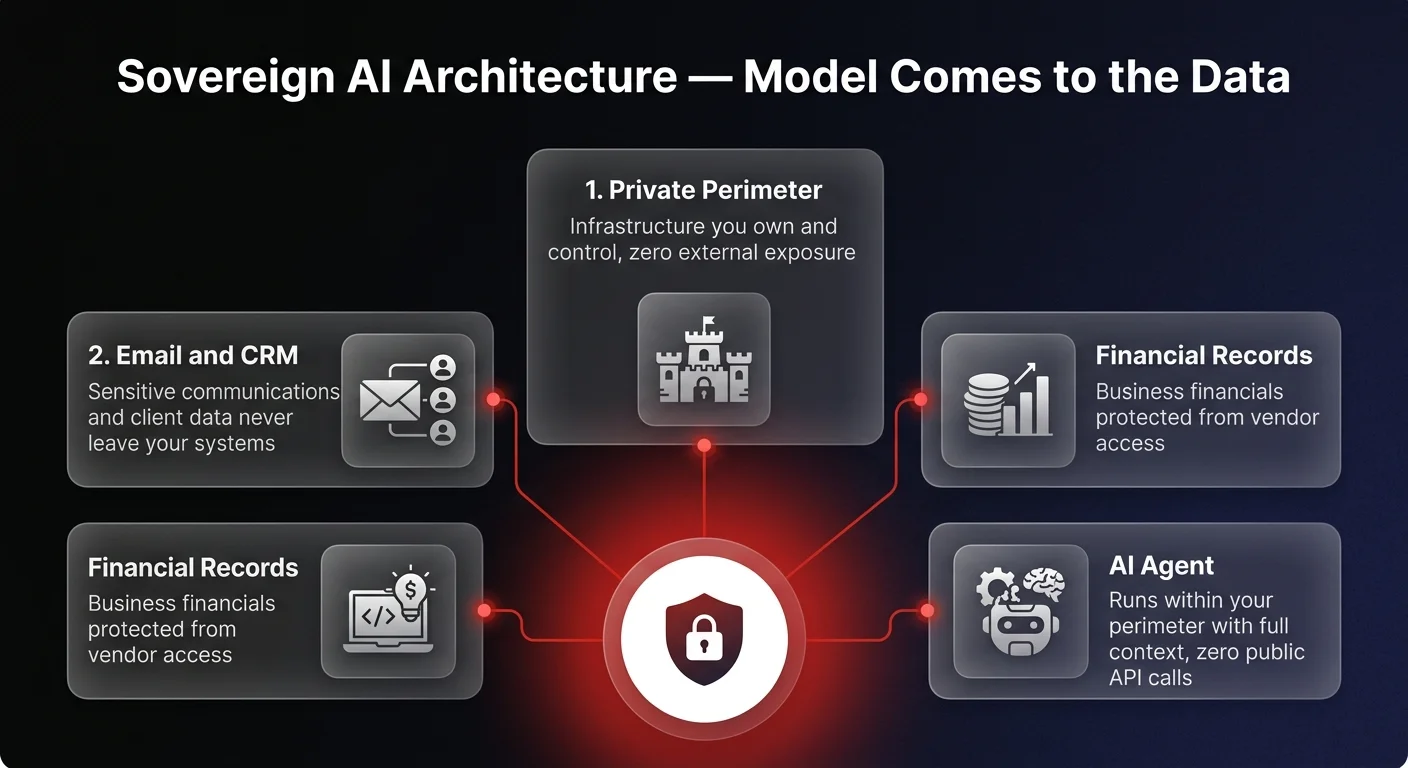
If I were running this through a standard consumer interface, I'd be awake all night. But I'm not. Because I'm not renting intelligence - I'm hosting it.
I actually have the intelligence that I need running on my computer with all of the data privacy restrictions that I need. This isn't just a technical preference - it's an operational necessity. When I ask my agent to analyze a sensitive negotiation chain, I know exactly where that data is going. It stays within my perimeter.
The game has changed. We used to think AI had to be this massive thing living in a server farm somewhere. But for high-stakes business logic, the model needs to come to the data, not the other way around. By keeping execution local or within a strictly controlled private cloud — the same approach we architect in our IT service management and security-conscious deployments — you give your agent "God mode" access without exposing the company to existential risk. This is what true ownership looks like: knowing exactly how your data is managed and knowing — with certainty — that it is safe.
Orchestrating data sovereignty
So the question is - how do you orchestrate this for your own organization?
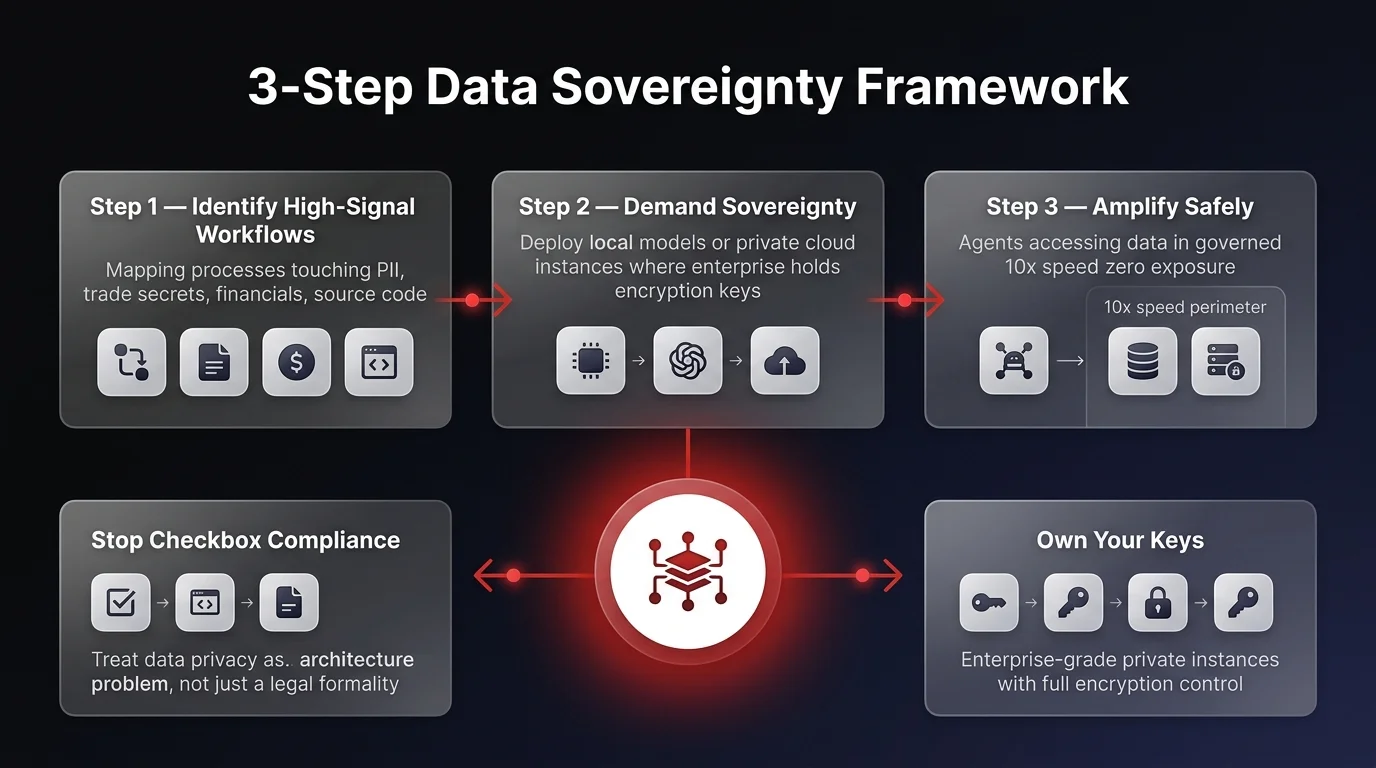
First, stop treating data privacy as a compliance checkbox and start treating it as an architecture problem. If your AI strategy relies entirely on public APIs for sensitive workflows, you don't have a strategy - you have a liability.
You need to identify which workflows require "high signal" context - the ones that touch PII, trade secrets, or financial data. For these, you must demand sovereignty. This might mean running open-source models locally for specific tasks, or using enterprise-grade private instances where you hold the keys.
Instead of trusting a vendor's terms of service, trust your own infrastructure. This shift allows you to amplify your team's capability without compromising security. You can let the agent loose on your internal wiki or your client database because the blast radius is contained.
Ownership is the new competitive advantage. The companies that figure out how to safely expose their core data to AI agents will move ten times faster than those paralyzing themselves with red tape. Don't let security theater stop you from building real operations automation — just build it on your own terms, within infrastructure you control.
Building secure architectures
At Ability AI, we don't just build agents - we build secure architectures that respect your data sovereignty. If you're ready to deploy AI that can safely touch your most critical business systems, we need to talk. Let's orchestrate a solution that gives you full power and full control.