
Video-first content automation is a production strategy where a single recorded video becomes the source material for AI agents to generate LinkedIn posts, newsletters, carousels, and social threads — eliminating manual content writing entirely. I record one high-signal video, and let AI agents orchestrate the rest. It's not about working harder; it's about radical asset leverage. Here is how I turned my content stack upside down.
Let's break it down
Let's break it down. The traditional way of creating content is broken. You sit down, try to be creative on demand, and end up burning out. That is low leverage. The new way is about capturing your best thinking in its rawest form - video.
In my workflow, everything starts with a video. It could be a webinar, a Loom recording, or a Zoom call. This is where the human value is - the original, interesting thoughts that only you have. Once that recording stops, your job as a creator is effectively done. The rest is just logistics, and logistics are for agents.
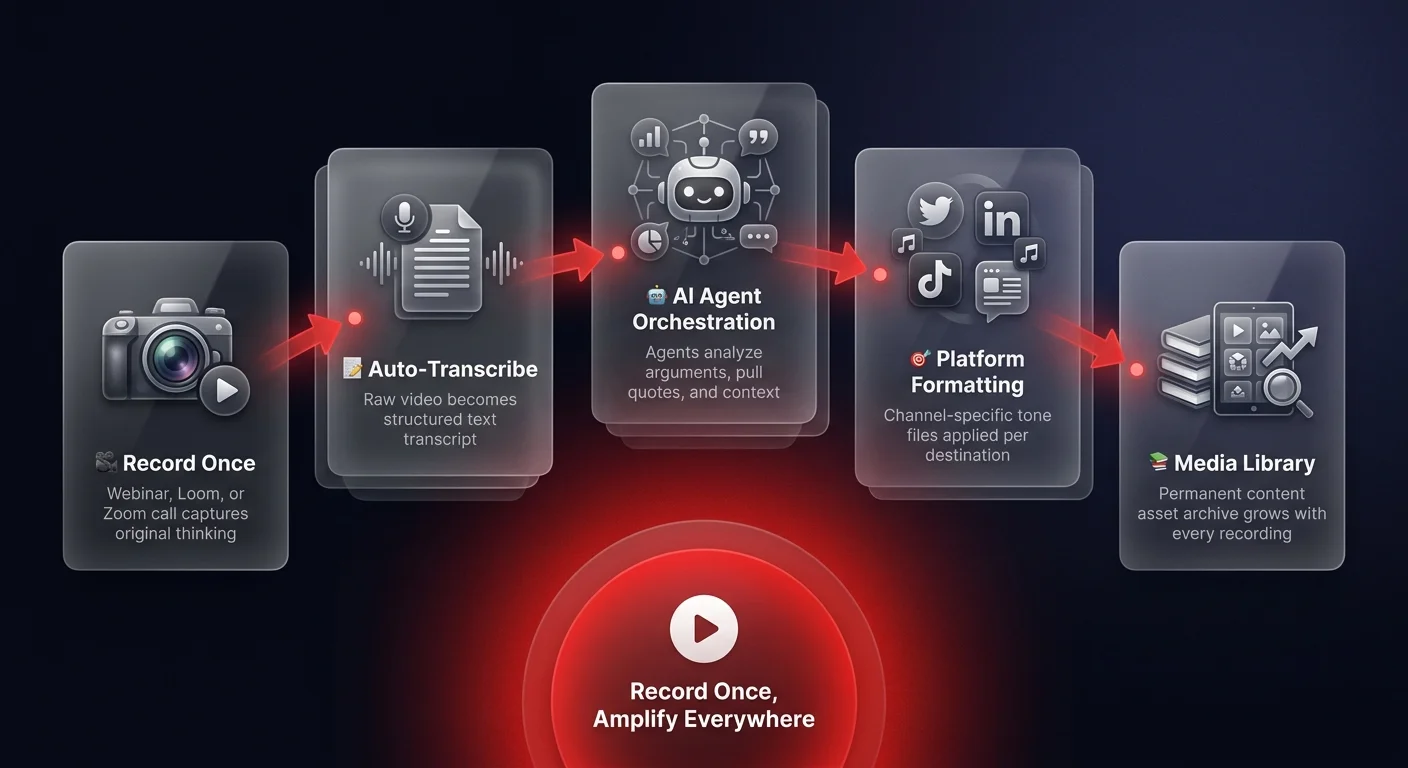
We take the transcript from that video and feed it into an agentic workflow — the same pattern we built in our AI content system case study. This is not just basic summarization. It is about preserving the nuance of your voice while reformatting it for different channels. We are flipping the script from 'how much can I write' to 'how well can I orchestrate'. You invest energy once in the source material, and the system amplifies it across every platform. This is how you escape the hamster wheel and start building a media asset library.
So what does this look like in practice?
So what does this look like in practice? I recently ran a webinar on AI agent adoption. Instead of spending the next three days manually chopping it up, I dropped the raw Markdown transcript into my Slack bot.
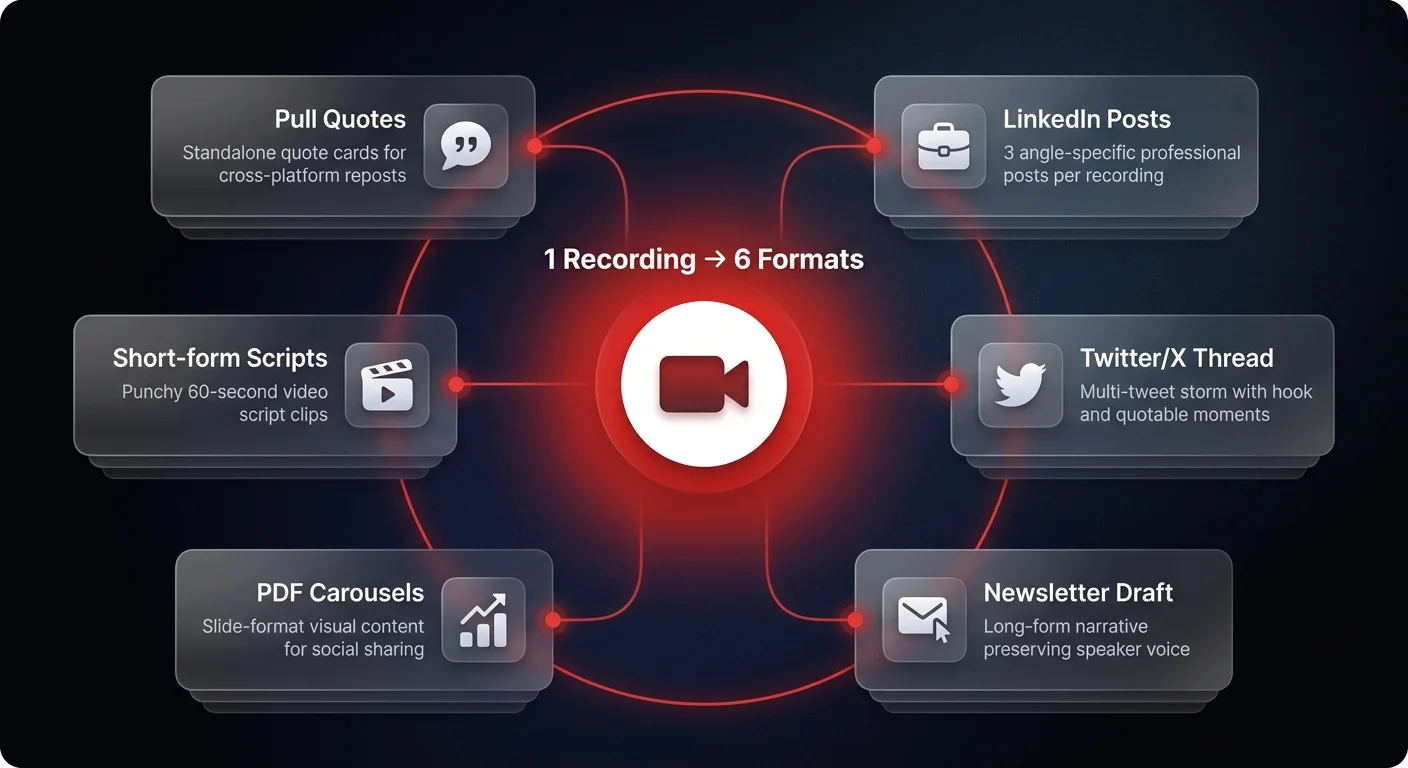
Within minutes, I had a folder full of targeted assets. The agents generated three distinct LinkedIn posts, a Twitter storm, a draft for my newsletter, and even the text for PDF carousels. It did not just spit out generic summaries. It analyzed the core arguments, pulled out the quotable moments, and structured them specifically for each platform's best practices.
This is the power of orchestration. I did not touch a single piece of copy until the final review. The agents handled the 'visibility work' — the formatting, the hooking, the structuring — the same transformation that AI marketing content teams are adopting to scale output without scaling headcount. My role shifted from writer to editor.
The question is not whether AI can write for you. The question is whether you have the pipeline to let it. If you are still writing tweets from scratch, you are competing against automated systems that never sleep. It is time to own your content supply chain and let the agents handle the distribution.
This is not science fiction - it is the standard operating procedure we use. At Ability AI, we help businesses build these exact agentic workflows to reclaim their time and amplify their message. Stop drowning in content creation and start orchestrating your visibility. Let's build your content engine today.